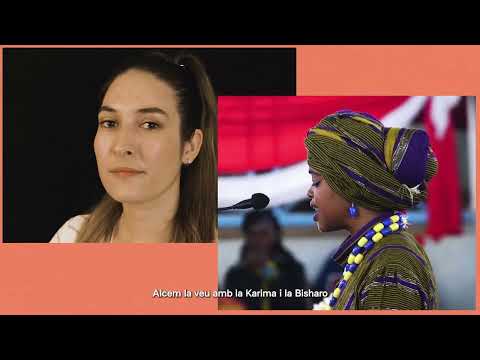
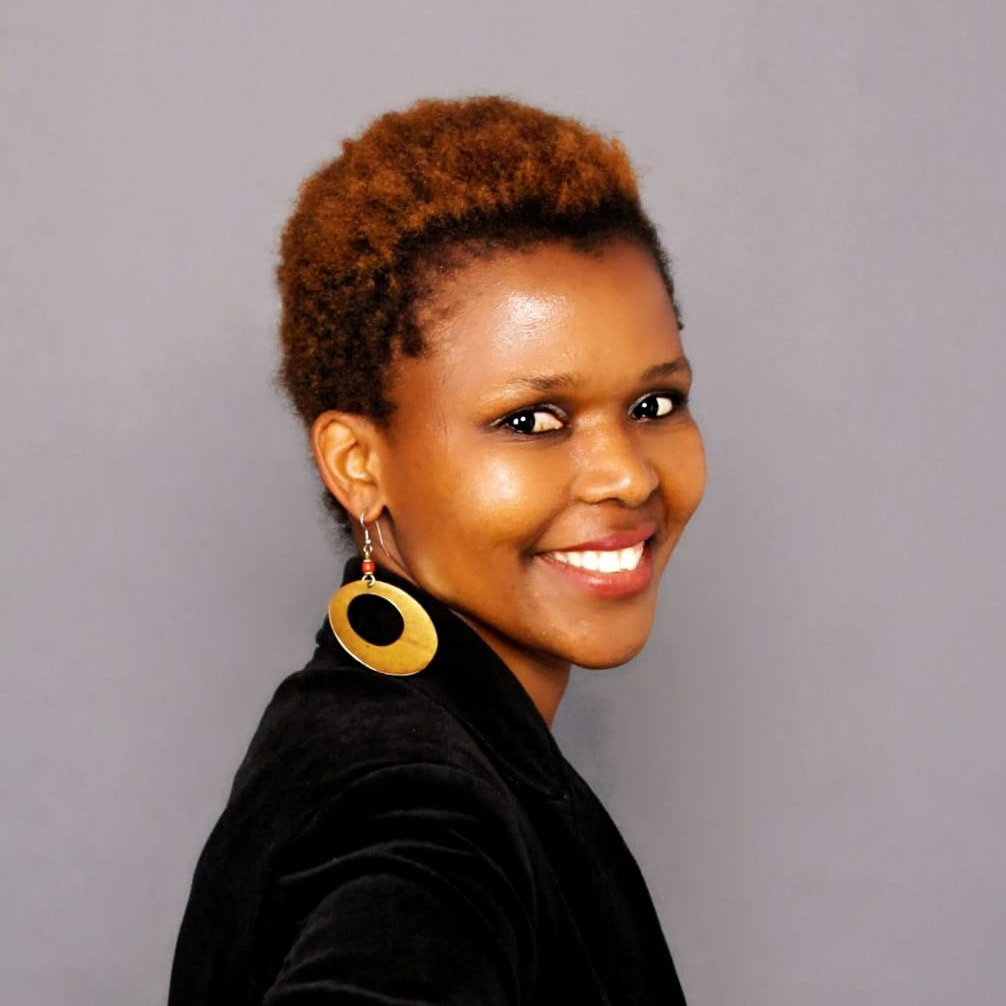
Bisharo Ali Hussein (Kenya, 1990), a Kenyan of Somali origin, is an expert in policy, gender and migration and currently works in the field of migration and development in East Africa and the Horn of Africa. She studied in Uganda and Kenya, and holds a postgraduate degree in gender studies obtained in Iceland. She also holds a master’s degree in public policy taken in the Netherlands and Spain, and has experience in gender and development studies. Passionate about the struggle for gender equality and for the health, rights and well-being of girls and women, her main work at present takes place in Kenya, where she acts as a consultant to governments and provides them with technical support to implement national, local and regional development plans and policies so that these can have a positive impact on the lives of citizens, migrants, refugees and asylum seekers. She is currently a member of Young Women Mediators Globally and is about to complete a course on diplomacy, negotiation and mediation. Once she finishes it, she will be able to take on broader negotiations, both in her own country and on a global scale.
Over her eleven years of experience working in the humanitarian sector, Bisharo Ali Hussein has developed a particular interest in gender equality, Afro-feminism, the empowerment of women through education and equal opportunities, conflict resolution, human rights and peacebuilding, among other areas.
A highlight of Bisharo Ali Hussein’s work is conflict mediation, an indispensable tool for guaranteeing peace in the territories and preventing outbreaks of violence. It has not been a bed of roses: as well as having to face obstacles simply for being a woman, the activist has had to overcome stereotypes related to her youth. Aware of how important it is for women to take part in mediation, she has never thrown in the towel throughout her career and continues to fight for her voice to be heard.
Another focus of Bisharo Ali Hussein’s work is achieving real and effective gender equality across the African continent, ending all forms of discrimination, and making women’s voices visible and heard. She is very clear about it: it is the potential of African women, through their entrepreneurship and leadership, that will transform the continent. Nevertheless, the road is still full of obstacles: according to the latest Amnesty International report (AI), dated 2022: “The prevalence of violence against women across the region reflects entrenched patterns of gender discrimination and other forms of inequality.” The organisation highlights discrimination against pregnant adolescents in education in several countries, such as Tanzania, Equatorial Guinea and Sierra Leone, and the rise in killings of women in countries such as South Africa, where they increased by 10.3%, as well as the prevalence of sexual offences and rape, which also rose. The report also denounces the lack of prevention of gender-based violence and the absence of protection for women, “as well as inadequate access to and availability of medical care, sexual and reproductive health services and care, psychological support, and legal and social support.”
Bisharo Ali Hussein is also a staunch advocate for ending female genital mutilation (FGM), which has a high prevalence across the African continent, even though the practice has declined in several countries. In places such as Somalia, Guinea and Guinea-Bissau, however, its prevalence rate is over 90%. In Somalia specifically, where Bisharo is originally from, 98% of the female population has been subjected to FGM. According to UNICEF data, FGM is estimated to affect more than 200 million women and girls worldwide: it occurs in 92 countries. And Africa is the continent where it is most common. The elimination of this practice is recognised in Goal 5 of the Sustainable Development Goals (SDGs), which focuses on gender equality. “Unfortunately, this is a deeply rooted cultural practice. We need to show respect for traditions and contexts that foster equality between men and women and that advocate inclusiveness and more open societies that dare to question the things that are wrong. In the case of FGM, many people do not dare to confront it for reasons of tradition or by claiming that it is a cultural practice linked to family honour. It is very saddening,” Bisharo Ali Hussein explains. For the activist, it will still take many years for FGM to disappear from the African continent, “but it has to start with us.” As she herself points out, the effects of this practice, deeply rooted in a worldview in which men and women are not equal, go beyond the physical: they also extend into the psychological sphere of girls and women.
You have always been clear that you wanted to develop your professional career in the field of peacebuilding and human rights. Where does this interest come from?
I think it comes from when I became aware of the challenges we faced in my community of origin, in Somalia. Many of these challenges required mediation and initiatives that fostered peace so that they would not turn into conflict. Growing up in such an unequal society, as I did, with so few opportunities for women, led me towards this kind of work. I always believed in the transformative power of dialogue and in empathy as an indispensable tool for resolving conflicts in the community. That inspired me to work on issues that required mediation. Because, what’s more, I believe that every voice has an immense capacity to contribute to lasting peace. In this context, my work has always been aimed at fostering mutual understanding and cohesion.
What kinds of obstacles and challenges have you encountered in your career as a young woman mediator?
I have encountered many obstacles, a lot of resistance and a great deal of scepticism because of social norms. I have had to face many stereotypes, both for being a woman and because of my youth. People have looked down on me, under the traditional idea that women, and especially young women, have nothing to contribute to conflict resolution. Mediation roles have historically been reserved for men, and this has fostered the popular belief that they are better at these matters, which, obviously, is not true. For me, tradition has been a very significant obstacle. There are still people in my community who believe that women are not capable of speaking in public or mediating in public spaces; that women are less intelligent or have less knowledge than men. Simply because we are women! Historically, our opinions have been valued less and taken into account less. To combat this, we must establish mechanisms so that no woman, either in my community or in the rest of the world, has to go through these situations. We have to work on our cultures and traditions so that one day we will all be equal.
Is there anything you have come across in a mediation related to what you mention?
For example, not being listened to because I was not accompanied by a man. Fortunately, [over the years], I have been able to improve my skills, build a significant network of contacts and work on my resilience, so that I can feel that I am breaking down some barriers in the field of mediation and peacebuilding. And that is how I have been able to navigate the obstacles I have encountered along the way.
You talk about building a network of contacts as something fundamental in your work.
Surrounding yourself with women, and also men, who can support you at certain moments is very important. I have always had mentors who have helped me overcome these obstacles and who advise me when I need their help. Unfortunately, there are still many women who are excluded from these networks and spaces. Finally, I would like to mention how important it is to cultivate patience in this work. That is extremely important. On many occasions I have come across frustrated and angry people; but what really matters is that the processes work, and for that patience is very important.
Can you give an example of a time when you had to be very patient?
Working in Somalia, where there were many security problems. The work was risky, and there comes a point where you can put yourself at risk. In those cases, you have to choose and decide whether or not to expose yourself. Self-confidence is also very important. Sometimes, and I don’t like to admit it, that confidence means coming across as rigid. You have to present yourself in a certain way in order to be included in certain processes. But there is no other way to do it: women must be included in negotiation and mediation processes because they always bring a different point of view. Women are empathetic because many of them go through these same problems [the ones in which they act as mediators] in their daily lives. That is why it is essential to empower yourself and learn from others, to build alliances; because there is one thing I am clear about: together we are stronger. Every woman counts.
What do women bring to mediation processes? Why is it so important that they are included in these processes?
They bring other perspectives, and their approach to conflicts is different [from that of men]. This approach is characterised by empathy, inclusiveness and a commitment to sustainability. Women also usually have a greater capacity to make marginalised voices visible, and they inspire collective solutions. They also recognise the importance of gender equality and, not only that, they consider it a fundamental path to achieving lasting peace. It is a proven fact, moreover: they know how to identify the challenges within families, communities and societies. Finally, we must not forget that women are usually the ones who suffer most in conflict situations, so it is extremely important to have women negotiators.
Let’s talk about the African continent, diverse and plural. And yet, from Europe we always refer to it as a single whole, often from a paternalistic and colonial perspective, unable to see the good things that happen in its countries and ignoring its potential.
There are still many far-fetched narratives that consider Africa to be backward or the continent to function as a single country. Obviously, this is not true, and we need to change these narratives that present the continent as a land of endless conflicts. We have enormous potential, unlimited resources and a huge amount of diversity, and we must embrace that. We must take into account the contributions of African women and promote inclusiveness and community empowerment for a more equal future. We must celebrate the richness of the continent and amplify its voices to confront stereotypes and improve collaboration; and not only that: we must unlock the potential of African citizens, something that is always undervalued. For example, in Europe people believe that the African population only wants to migrate there, they don’t realise that this is not the case: most migration on the continent is internal; people want to stay here. According to the data we have, 80% of African migrants stay on the continent; there is no desire to go to Europe.
You are an active feminist. Where does Afro-feminism stand today, and how does it relate to white feminism?
I think Afro-feminism challenges all kinds of systems of oppression, and it does so intersectionally, claiming the rights of marginalised communities, among others. But all of this is done from the perspective of African women, not white women. White feminism is very important to us, above all because it is helping us to dismantle patriarchal structures and challenge social injustices. In the case of African feminism, it is only now that we are beginning to hear women’s voices on critical issues. We are fighting to contribute to the expansion of knowledge, but also of public awareness of the needs we have. And that is the difference between white feminism and African feminism: white feminism is dealing with higher-level rights, so to speak; we are working for the right to vote or for equal pay. For now, we are pursuing simple things: access to knowledge, to the vote, to having our own spaces, to being able to talk about gender-based violence… The capacities of the two [white feminism and Afro-feminism] are different, and so are their goals. It is possible that white feminism cannot understand what we are pursuing. What is clear is that, through Afro-feminism, we seek to highlight the agency of African women.