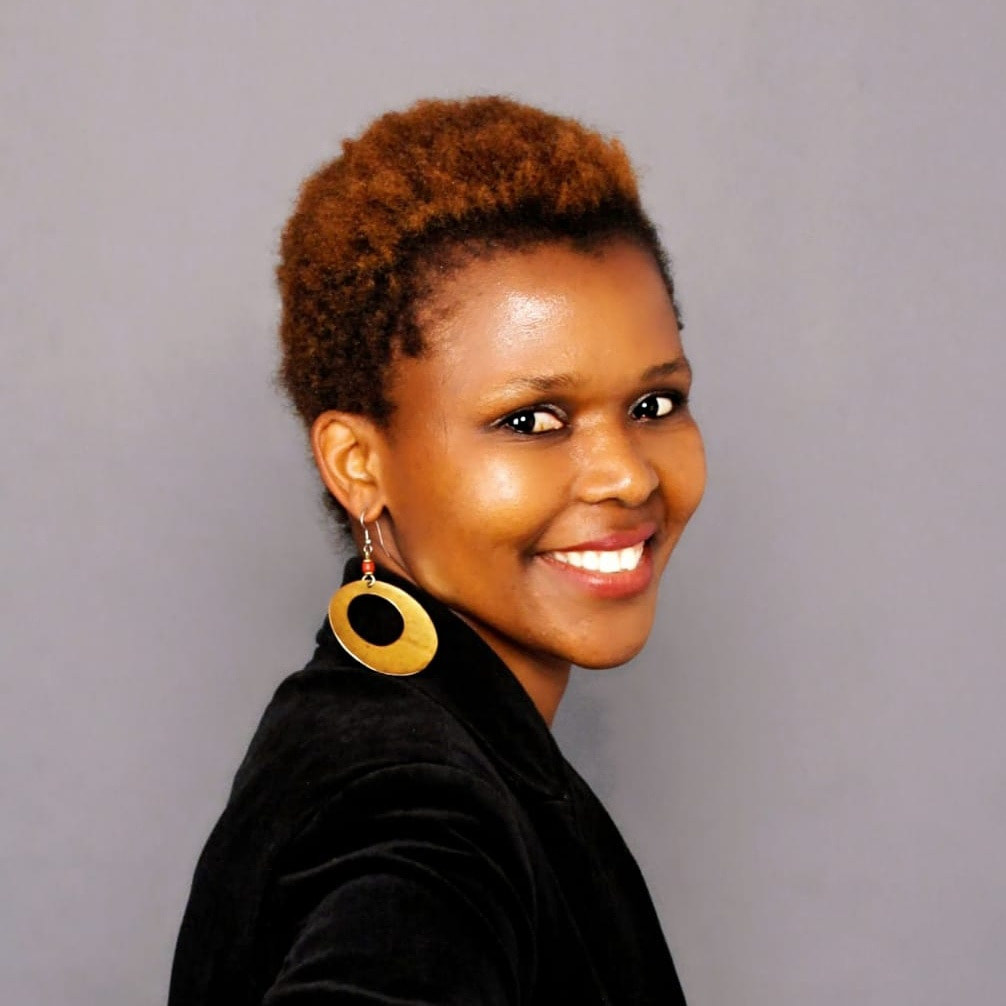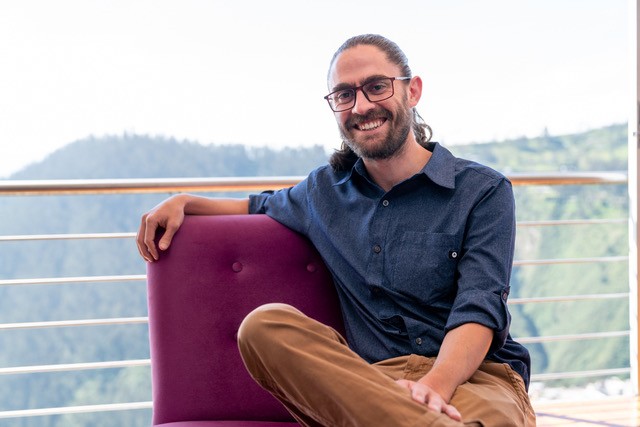

Nontokozo Sedibe-Sabic, an activist, mediator, and community leader whose work focuses on anti-racist and anti-oppressive practices, is the founder and director of Ubuntu Co-create. Originally from South Africa—specifically Nelspruit, Mpumalanga, a township of Johannesburg—and raised by her grandparents, Nontokozo understood the meaning of community and racism from an early age. Her home was a constant gathering place where people from the community came and went, while the streets were filled with neighbors who felt like family and could always be relied upon in times of need. At the same time, the country was living under apartheid, the system of racial segregation imposed by the white minority that ruled South Africa until the first democratic elections in 1994.
“I was born during apartheid, so it was normal for the police to suddenly arrive, arrest students, and fire tear gas. During that powerful struggle for freedom, young people like my uncles and aunts fought in the streets for liberation. I grew up surrounded by that energy, but also by fear: I remember seeing the terror in my grandmother’s eyes, as she constantly worried about what might happen to her children,” Nontokozo recalls. “At the same time, I had a wonderful childhood whenever the police and the army were not around. There was a strong sense of community, rooted in the philosophy of Ubuntu. If my grandmother ran out of sugar, she would simply hand me a cup and ask me to borrow some from the neighbors. It was also natural to greet everyone on the street and to show every adult such respect that they had the authority to discipline you if your family was not there. Even though we lived under oppression, our community held on to its traditions, and we managed to keep hope alive,” she adds.
Although she was born into a community marked by socioeconomic hardship, thanks to her mother’s hard work Nontokozo did not face the same barriers as many other Black South Africans and was able to attend a private school. A member of the so-called Mandela or Rainbow Generation—the first generation to be educated after apartheid without formal racial segregation—she remembers that many of her white classmates were frightened, perhaps even “angry,” in the face of South Africa’s new reality. “We were the first generation to truly grow up together, and it was difficult for white children because they had grown up hearing negative things from their parents about Black people. It was also difficult for us because we had to adapt to this new era, sharing classrooms with people who feared us and with whom we had such a recent history of violence,” she recalls.
Years later, Nontokozo moved to Europe, first to Croatia and then to Spain, determined to put Indigenous knowledge into practice and adapt it to the modern world in order to build alternative communities and challenge racism. After living for several years in Navarre, she relocated to Catalonia, where she continues her anti-racist work in a world increasingly shaped by the resurgence of white supremacist politics embodied by Donald Trump.
“What is happening in the United States is just one example of the reinvention of imperial injustice. Across Europe, governments have passed laws to deport migrants, and there are plans to create an agency similar to ICE. We are witnessing the resurgence of fascism,” she argues. “These systems are designed to create conflict and division. Many white people think racism is simply about being a bad person, but it has nothing to do with individual morality. Racism is systemic—often subtle—and something we learn from a very young age. I have white friends who unconsciously behave in racist ways, and within migrant communities there is also racism against Black people. Society fears the Black body, which was dehumanized through slavery and reduced to property,” she laments.
South Africa, a country of 63 million inhabitants and covering more than one million square kilometers, is the southernmost nation on the African continent. As an economic powerhouse in the region, its collective image is still shaped by the infamous years of apartheid and by the rise of the hopeful figure of Nelson Mandela, who became the country’s first Black president in 1994. More than three decades have passed since then, yet South Africa remains divided, with Black and white communities still largely segregated, although political power is now held by the Black majority.
The foundations of today’s South Africa began to take shape with the arrival of Dutch, French, and German settlers in the 17th century. Initially known as Boers or farmers, these colonizers controlled political and economic processes for centuries. Between 1948 and 1994, by then known as Afrikaners, they established the apartheid system, through which they maintained racist control over the country despite representing less than 5% of the population. Although the system eventually collapsed, it left behind a legacy of inequality that continues to shape the country’s present. Thus, in this land of stark contrasts, the landscape can change dramatically simply by crossing a street: one may move from homes without bathrooms to luxury villas with swimming pools and every imaginable amenity.
Currently led by Cyril Ramaphosa, South Africa has recently made international headlines for two events with global repercussions. The first was Donald Trump’s unfounded claim that Afrikaner farmers are suffering from genocide. More recently, the country has drawn attention due to a new wave of Afrophobia targeting migrants from neighboring countries, in which Black South African mobs have attacked undocumented migrants seeking opportunities.
“The deterioration of the country’s socioeconomic conditions, including an unemployment rate above 43%, has coincided with the rise of anti-immigrant activism and the formation of new paramilitary groups such as March and March,” states Human Rights Watch. “These groups use foreigners as scapegoats for South Africa’s economic problems, poor public services, and high crime rates, despite studies that disprove these claims,” the organization adds, highlighting that outbreaks of Afrophobia have occurred periodically since 2008. The fact that they have resurfaced in 2026 reflects the current tensions affecting the country.
You are the director of the Ubuntu association, which focuses on combining indigenous wisdom with western methods. What are your main areas of work?
At the moment, our main areas of work are training and consulting. In recent years, particularly in Spain, racism has become a more prominent issue, and I focus on providing anti-racism training for organizations and individuals. I also mediate conflicts that arise within organizations around racism and other forms of oppression. My approach to training—which covers sustainability, community, and the struggle against oppression—is based on Indigenous practices that create safe spaces for people to overcome trauma. In addition, I offer spaces for white people to process their own relationship with white supremacy, and that is a lifelong process. I also run workshops for migrants where we share the trauma of migration and colonization, heal wounds, and create spaces for joy, rest, and creativity.
To fight against the capitalist system, is it possible to adapt to it, or should we organize ourselves into parallel communities?
Ideally, we would step outside the system, but that is extremely difficult—almost a utopian dream. I live in community and have been involved in the ecovillage movement in Europe, and even though we live in community, we are still operating within capitalism. To truly live outside the system, you would practically have to disappear. However, there are valid examples of alternative economies and self-governance systems such as sociocracy and holacracy. Therefore, we can still take small steps, such as living in community, exchanging goods, and creating neighborhood spaces where people can come together. We need small acts of solidarity, which are also a form of community, because we do not have to live together to be a community. I believe that now, more than ever, we need a sense of community. We need to find ways to connect with our neighbors—simple things like exchanging books and clothes or sharing food. These are things we can do, and they are still not illegal.
You wrote a chapter in the book Tejer comunidades. Invitación a pensar la vida en común (Weaving Communities: An Invitation to Think About Living Together), which brings together the experience of a cooperative. What should be taken into account when starting a community project? What obstacles arise along the way?
Most communities fail within the first two years, and the reason is that the initial dream is often too ambitious. When people live together every day, complications inevitably arise. You have to decide what kind of community you want to build, and sometimes the dream is not the same for everyone involved. That is why decisions need to be made about the economy, because we are still living within a capitalist system and people need to generate income, as well as about issues such as food: How much will we grow? Will it be enough?
Everyday life creates many conflicts, and if a community does not have a clear agreement on how to deal with them, problems emerge. The difference between community in South Africa and community in Europe is that, where I come from, the first group of people in a community are family members. And this helps greatly: we accept people as they are, without expectations; we do not expect them to be anything other than themselves. In Europe, communities often expect people to behave in a certain way. That is where the saying “find the tribe where you fit in” comes from.
It has been a long time since Europe was deeply connected to community, and individualism is now very strong—even seen as a form of success—while interdependence is often perceived as a weakness. As African women, although colonization affected us deeply, it did not take Ubuntu away from us.
South Africa experienced apartheid. The religious leader Desmond Tutu spoke about Ubuntu. What is the Ubuntu philosophy? Why can it help solve some of the world’s problems?
Ubuntu comes from the word Umuntu, which means the person: “I am because we are.” We are not islands; we become human through other human beings. We must care for one another, create fair systems, and reconnect with the Earth. That is Ubuntu. It means showing consideration for your neighbor; it cannot be that you have everything while they have nothing. Ubuntu helped us survive apartheid. Today, there is a great deal of Afrophobia in South Africa. It is common to blame problems on foreigners and migrants instead of looking at the government and the legacy of apartheid. In response to this situation, many people are calling for a return to Ubuntu; we need to remember who we are and seek fairer systems for sharing resources.
South African people are fighting to preserve traditions such as the Ubuntu philosophy, but the world is changing rapidly, and with the internet, content and cultures have become global. How are social networks changing, shaping, or even destroying traditions?
In the past, we blamed television for bringing American culture and criticized young people for wanting to imitate Western lifestyles. Now we travel, we have access to social media, and therefore we are even more influenced by outside cultures. As a result, we have become more individualistic. This is the truth: Ubuntu is slowly dying. At the same time, to some extent, we still maintain rituals and celebrations. But in everyday life, yes, Ubuntu is disappearing. We live more and more according to a Western way of life; the custom of going to your neighbor’s house to ask for sugar no longer exists, except in rural areas. In cities, individualism prevails. Sadly, many young people live according to a European colonial model of life.
In Africa, colonization persists through governments that serve external interests. How do you perceive the process of colonization and its evolution?
Colonization has never left Africa; it has transformed into neocolonialism. In some countries, white colonizers simply left physically and were replaced by governments that serve other interests. In South Africa specifically, white people never left, and after the end of colonial rule, we experienced apartheid. I believe colonization is an illness that began in Europe through imperialism, white supremacy, patriarchy, and capitalism. We cannot talk about one of these systems while ignoring the others because they are interconnected.
That is why, as peoples, we need to find ways to be in solidarity with one another, and this mutual solidarity is one of the ways to decolonize. We cannot become Indigenous in the same way we once were, but we can find Indigenous ways of living that work for today. Ubuntu is one of them. When you care for your neighbor, when you grow organic food and share it, you are walking the right path and participating in the process of decolonization.