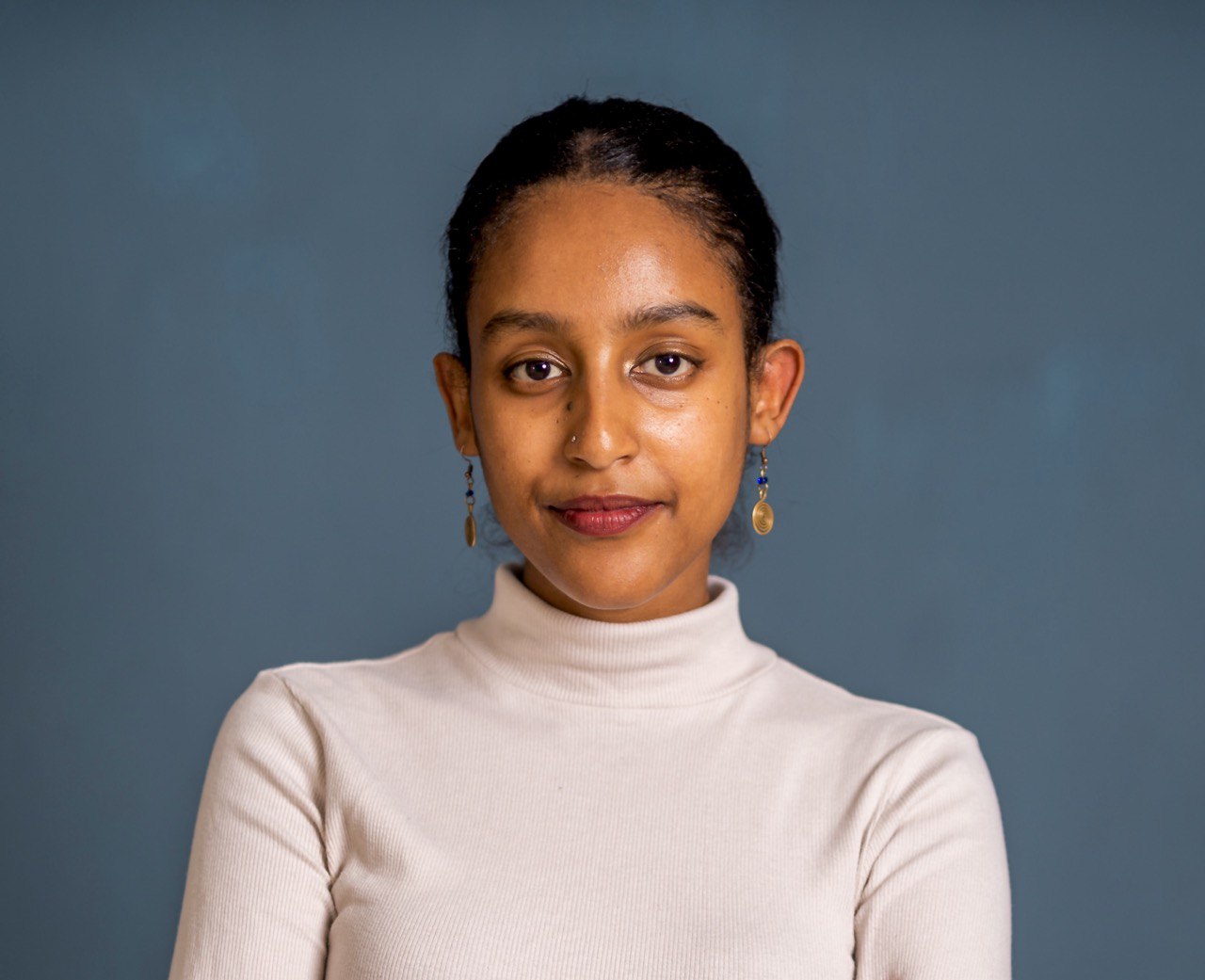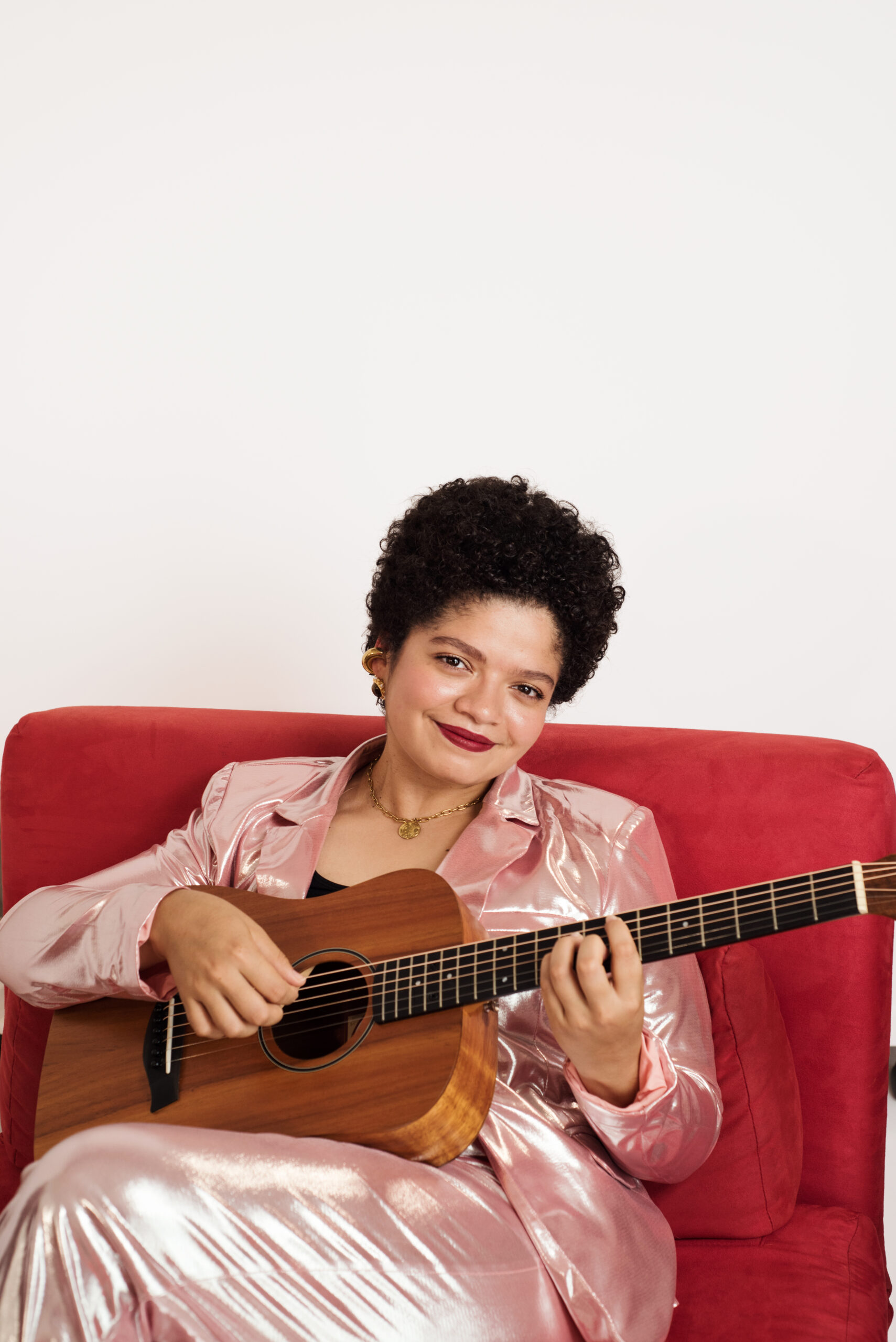

Ceshia Ubau, 28 years old, originally from Nicaragua, is a singer-songwriter and psychologist specializing in sexual abuse. Now living in exile in Spain, she was born into a farming family and first became curious about music while listening to her maternal grandmother make up the lyrics to religious hymns. Her grandmother was a humble woman who never had the opportunity to receive an education because, as the eldest daughter, she had to take care of her siblings and later, as a mother, her own children. Unlike her grandmother, Ceshia Ubau was born in a time when more opportunities were available, and she made the most of them, pursuing training in the arts as well as studying Psychology at the Central American University of Nicaragua. Yet these opportunities did not always unfold as she had hoped: as a child, she preferred playing the guitar, but ended up learning the piano because it was considered a more “feminine” instrument. And when the time came to pursue higher education, although she wanted to enroll at the Conservatory, she had to study Psychology instead.
“I didn’t go to the Conservatory because I wasn’t allowed to. There has been a very curious ambivalence in my family: they encouraged me to pursue musical training, but when I wanted to make it a profession, they said no. Despite that, my parents have always supported me in every way they could,” Ceshia Ubau recalls. “Studying Psychology was also a matter of discussion, because they didn’t agree with it, due to this belief system that considers art and the humanities incapable of providing a livelihood. Without a doubt, it is a difficult professional field, but I am stubborn,” she adds.
Through her own efforts, she has forged a career in group psychology specializing in sexual abuse, as well as another path in the arts, where she explores Central American folklore and urban genres. She has released three albums—Ojos del Alma (2017), Luz (2022), and Edén (2024)—which have received awards in Central America and, further afield, in the United States, and have earned her recognition through a pre-nomination for the Latin Grammy Awards.
Despite her success, Ceshia Ubau’s journey has not been an easy one. She was forced into exile by the lack of freedoms under Daniel Ortega’s dictatorship. She took part in the student protests that challenged the government for months in 2018 and, out of fear, like many others, was forced to flee. She left in 2018, first going to Costa Rica before eventually settling in Spain, where she currently lives.
Throughout this migration process, what weighs on her most is not being able to watch her family grow older and not being there for important moments: weddings, funerals, birthdays. Significant dates that, from a distance, hurt because of the feeling of helplessness. Yet this journey has also allowed her to experience the kindness of others, and therefore to retain hope in humanity.
“I have been someone who has been helped by many other people, and that has been crucial. I remember that, when I had just arrived in Costa Rica, many people opened their doors to me. Artists, Costa Ricans, women and men. I also arrived at a time when the wave of migration was only just beginning; I was part of that first group. Being able to receive support from that community has helped me make room for hope,” Ceshia Ubau acknowledges.
More recently, she collaborated on the film Voicemails for Isabelle. “Just like the pre-nomination for the Grammy, it helps me believe that I have taken another step forward in my career. I am very excited about Voicemails for Isabelle, a film by a director of Nicaraguan heritage who wanted to include a nod to Nicaragua. In one scene, in a Latin bar in the United States, my song plays in the background while people are drinking Nicaraguan beers. It’s only a couple of minutes, but it moves me, excites me, and gives me hope.”
In Nicaragua, people have few options for survival: either they emigrate, or they lower their heads and adapt to a corrupt and dictatorial system. After years of repression, with the opposition silenced, there is currently little hope of overthrowing Daniel Ortega’s dictatorship. Since 2018, when the country experienced its last outbreak of social resistance, an estimated more than 838,000 people have been forced to leave this Central American country. That figure represents 11.8% of the population. It is the largest exodus in Nicaragua’s history. The crisis is also reflected in neighboring Costa Rica, the main destination for Nicaraguan migrants: UNHCR has officially registered more than 180,000 people there, although the actual figure is much higher.
Daniel Ortega was a member of the Sandinista National Liberation Front (FSLN), the left-wing movement that helped overthrow dictator Anastasio Somoza in 1979 and later led a turbulent transition. For a decade, Nicaragua was embroiled in a civil war in which the United States funded paramilitary groups opposed to the FSLN. Led by Ortega, the Sandinistas won Nicaragua’s first democratic elections in 1984. But the conflict was still ongoing at the time, and it was not until 1990, after the civil war had ended, that Nicaragua began to establish a stable democratic system.
During the 1990s, Sandinismo became the main political force on the left, while Somocista and liberal groups formed right-wing political parties. The Sandinistas were defeated in the elections held in 1990, 1996, and 2001. But in 2006, Nicaraguan society gave Ortega another opportunity, and he became president. He has ruled the country ever since.
Ortega’s authoritarian turn became particularly evident in 2018, when a Social Security reform triggered a social uprising in which university students barricaded themselves inside campuses and confronted the authorities for months. At least 335 people were killed and 2,000 injured in the conflict. The violence subsided after the government promised to establish a negotiating table, but Ortega ultimately rejected the talks and continued his purge of opponents. Repression intensified once again following the fraudulent 2021 elections, when the Nicaraguan regime began stripping people of their citizenship and, under threat of imprisonment, forcing them to leave the country.
Thus, this regime, which has no real ideology, has directed its repression against key figures from both the left and the right who shaped Nicaragua in the 20th and 21st centuries. Those forced into exile include former Sandinista guerrillas such as Sergio Ramírez and Dora María Téllez; right-wing democrats, including members of the Chamorro family; and countless ordinary people—students, lawyers, journalists, and activists—who can no longer endure life under a tyranny that seems impossible to overthrow.
It is an exile in which many also face the discrimination and racism that, unfortunately, accompany the experience of migrants around the world.
Do you consider yourself more of an artist or a psychologist specializing in sexual abuse, or both?
I think both. There have been periods in my life when I have devoted myself exclusively to music, and others, when I have focused exclusively on psychology. I can’t do just one thing; I need both, and the two also complement each other.
How do they complement each other? How do you use music in therapy with women who have experienced abuse?
I have developed my practice working with groups, through community-based interventions and psychoeducational programs. I have had the opportunity to work in clinical psychology, but my experience has leaned more toward community work. So, during sessions, I have incorporated activities related to art. For example, with several groups of women survivors of violence, we have created poems set to music and songs that they co-write, telling the story of their recovery process.
For me, it is important to bring in some kind of artistic tool or musical instrument. In the process of recovering from sexual abuse, the body is very important. It carries memories, and it is not so easy to give someone a hug or greet them with a certain degree of physical contact. It is not so simple because the body carries a memory of being on alert.
So musical instruments, particularly percussion instruments – and this has been scientifically demonstrated – can help release cortisol, especially when they are played in a group.
How would you describe the situation of women in Nicaragua?
Living under a dictatorship is a major factor that places everyone in a vulnerable position, including those who may be close to the regime. However, with or without a dictatorship, the situation of women in Nicaragua is appalling. There are high rates of femicide, sexual offenses, violence against children, and teenage pregnancy, because we understand teenage pregnancy as a form of sexual abuse.
There was a time in Nicaragua when Law 779 was passed, criminalizing violence against women. There was also a law that allowed therapeutic abortion, but all of that has disappeared. Although Law 779 is still technically in force, there are no shelters for victims of violence, and there is no comprehensive support system because many human rights and gender-focused NGOs have been shut down.
So, it is a state of complete lack of protection.
Sandinista writers such as Gioconda Belli and Sergio Ramírez are in exile. They have written about Sandinismo and the period that came before, about those who lived through the war. You belong to a different generation. How does art reflect social and generational changes? What does an artist tell us today?
We are looking toward hope and toward the possibility of looking inward. This whole process has made me question myself as an artist: What do I want to talk about, and what do I no longer want to keep feeding? Because music is a very powerful communication tool and has a huge social impact.
I have chosen to sing and talk about hope, as well as my own experience as a migrant. I found myself in a host country, Costa Rica, where xenophobia toward Nicaraguans is well known. At the same time, as Nicaraguans, we have arrived carrying prejudices of our own, which are also forms of xenophobic attitudes, rooted in a history and a nationalism that tries to say, “My country is better than yours.”
So, how could I use music to address an issue that could help bring communities together? Because my goal is to make music that invites people to build community.
For her artistic contribution, she has been recognized at the awards of the Association of Composers and Musical Authors of Costa Rica. In 2023, she received the award for Best New Song for Para Mí, and two years later, she received another award: her album Edén won Pop Album of the Year, and she was also named Central American Singer-Songwriter of the Year. She has also been a pre-nominee for the Latin Grammy Awards.
How does it feel not to be able to perform in your own country?
It is not easy at all. All of this has been made possible through teamwork. The only thing I have been certain of throughout my life is that I had to continue with music. It is my life’s purpose, and I have been able to see the impact it has on people. That helps me understand that there is a reason for me to be in this world.
So, during my first years as an artist, I did everything I could in terms of work and tried to invest in my own music. Over time, it paid off: I started working with a record label and began expanding my team. These are things that have helped me professionalize my project, reach different stages, and receive recognition.
But it has meant facing not only what it means to be Nicaraguan in Costa Rica, but also what it means to be a young woman who was often questioned about whether she really wrote her own songs.
Your songs look towards hope. What other themes do you explore in your musical collections or poems?
Something that has happened to me recently is that I have started talking about sexuality, and I would like to continue exploring it in greater depth, also as a way of living love – romantic love – in a healthier way. For me, writing has also been my own form of therapy, and there are very personal subjects that I have brought to the forefront.
There is a song called Melodía Sagrada (Sacred Melody) that pays tribute to the traditional music of Latin America. In it, I tell my story as a woman experiencing forced displacement and call for the integration of the world’s diasporas within their communities.
Las mujeres de mi tierra (The Women of my Land) has been very well received, and I wrote it about my grandmother. I try to show who I am through my songs.
What brought you to live in Spain?
I came through a program for refugees. Fortunately, I had the opportunity to choose, because I could also have gone to the United States. For me, it is very important to be in a place with warmth and a human connection, and I have found that here. I feel very fortunate to be here.
I also grew up influenced by Spanish music – La Oreja de Van Gogh, José Luis Perales, Ana Belén – and I believe that, culturally, there is a relationship between Nicaragua and Spain that can still be deepened. I am very eager to contribute to Central American art with whatever I am able to learn here.