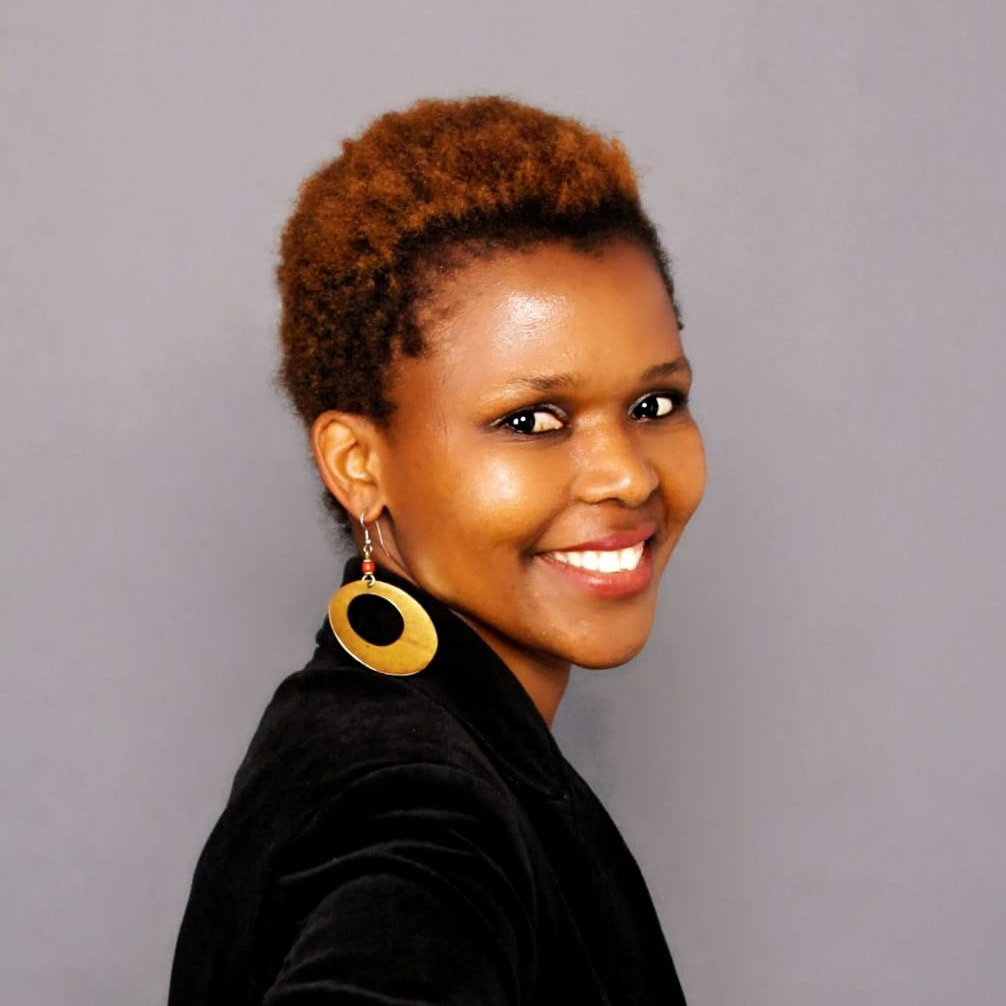
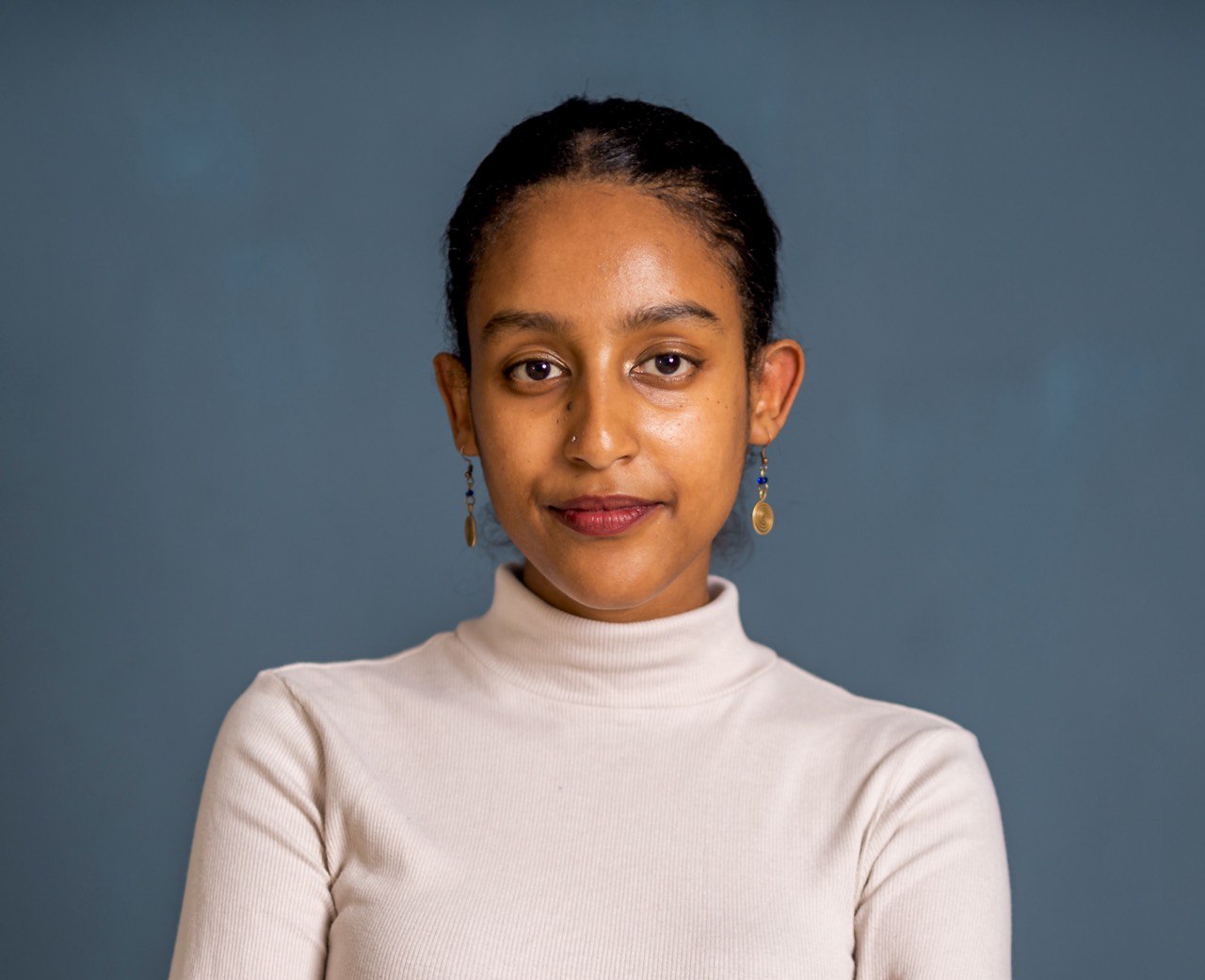
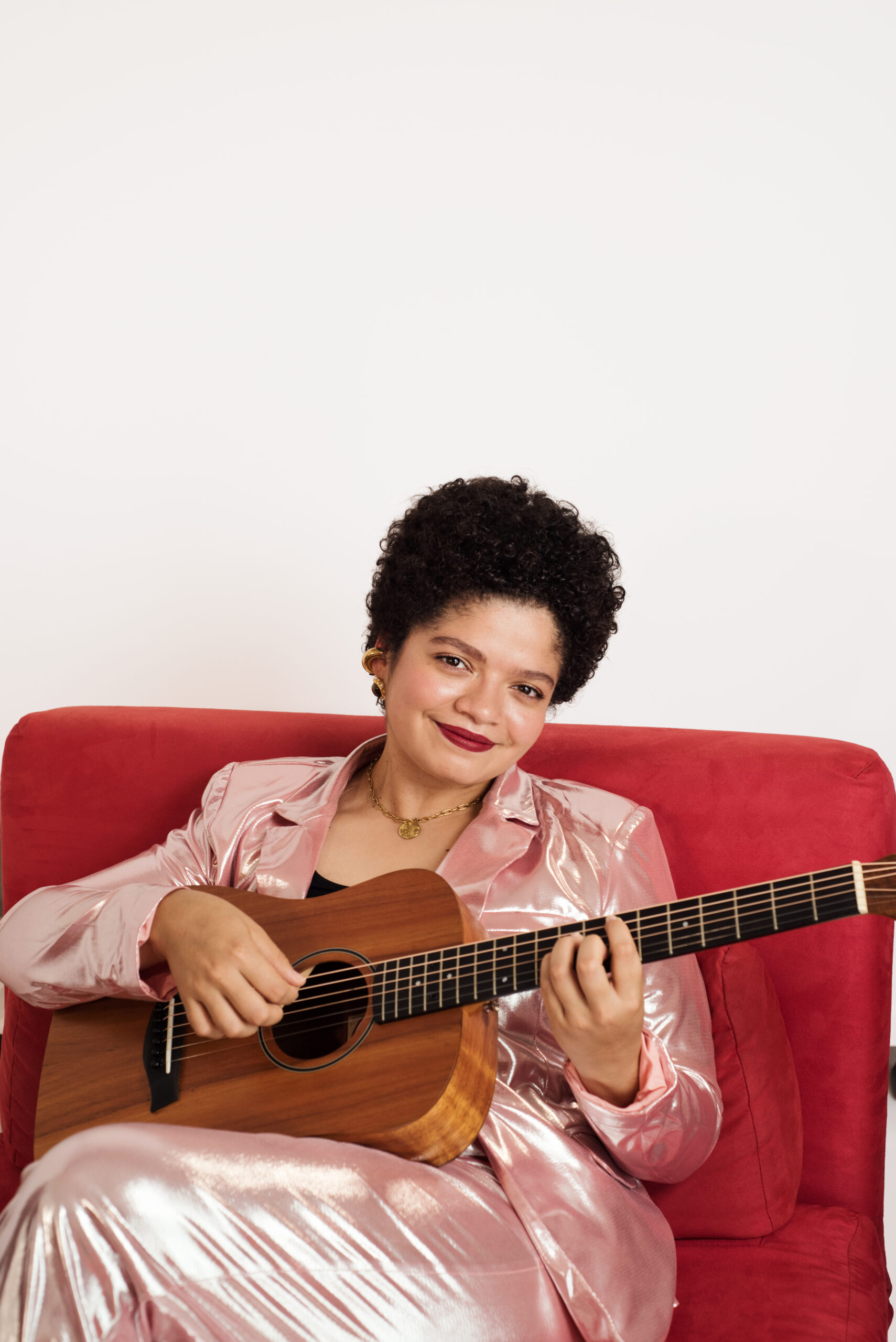
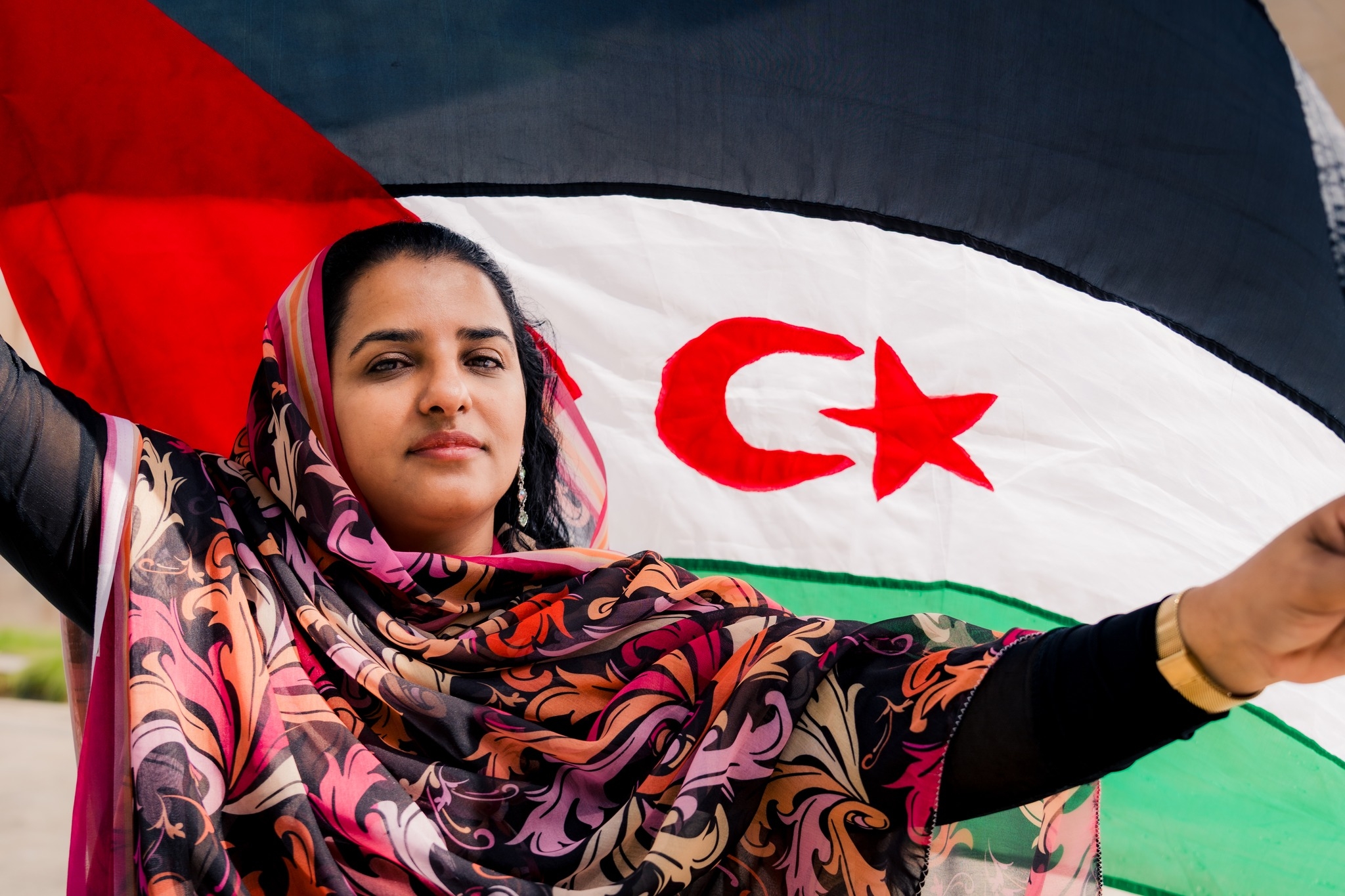
Haydee Castillo is a Nicaraguan activist who since her youth has fought for the freedom of her country and the defence of human rights. Aware of the importance of growing up in a free country, she soon learned of the need to get rid of the dictatorship of Anastasio Somoza, who ruled the country from 1967 to 1972 and from 1974 to 1979. Involved from an early age with the Juventud Franciscana (JUFRA), throughout her life and career Haydee Castillo has taken part in various projects aimed at improving living conditions in her country, such as the Movimiento Estudiantil de Secundaria (MES), the Unión Democrática Liberal UDEL, the Frente Amplio Opositor (FAO) and the Cruzada Nacional de Alfabetización, among others.
Haydee Castillo’s life cannot be understood without mentioning the student movements. She took an active part in the struggle against the Somoza dictatorship through the Movimiento Estudiantil MES, the Asociación de Estudiantes de Secundaria (AES), the Consejo Universitario de la Universidad Nacional (CUUN) and the Federación de Estudiantes de Centroamérica. With the triumph of the Sandinista Popular Revolution, continuing with the student movement, she joined the General Staff of the Cruzada Nacional de Alfabetización in the Department of Estelí; she was also one of the founders of the Centro Universitario Regional del Norte, which operated as a branch of UNAM Managua, and took part in the creation of the Unión de Estudiantes de Nicaragua (UNEN) while she was in Managua for her studies. Through UNEN she took part in the coffee and cotton harvesting drives on the farms. “This was the contribution of university students to providing the country with foreign currency,” she explains.
Haydee Castillo was always committed to the Sandinista cause through her participation in various mobilisations and projects that were fundamental to the triumph of the revolution, such as UNEN, the Juventud Sandinista and the Asociación de Mujeres Nicaragüenses Luisa Amanda Espinoza (AMNLAE). She was also part of the structures of the Frente Sandinista de Liberación Nacional (FSLN). The activist lost her first husband, who was murdered by the counter-revolutionary movement (the Contras), financed mainly by the United States.
“I will never forget when the Peace Accords were signed [with the Contras, in 1990] and I was able to travel around the country without fear, without being ambushed or dying in some attack,” she says. Now, with the country in the hands of the Ortega-Murillo couple, who exercise iron-fisted, dictatorial control over everything that happens in Nicaragua, Haydee Castillo, who lives in exile, does not hide the pain she feels when she thinks of the betrayal of the project for which so many men and women fought. “We, as young people, did a great deal to get out of the Somoza dictatorship and for the revolution to triumph (1979-1990), but we were not the ones who took power or the main posts in the institutions of the State, where the main decisions were made. This is a failed, betrayed revolution, but I am left with the satisfaction of having fought against the Somoza dictatorship and of having distanced myself from the FSLN at the moment it began to lose its way, when the values of the cause began to be betrayed,” she explains.
Nicaragua, a century without social reconciliation
With just over six million inhabitants, Nicaragua is a Central American country bordering Costa Rica to the south and Honduras to the north. It is the second poorest country in an extremely unequal region, surpassed only by the failed State of Haiti. A country of volcanoes, beautiful coastlines and lush nature, Nicaragua has not had a moment of peace in the last century: the long-lived dictatorship of the Somoza dynasty, the war of the 1980s and the devastating Hurricane Mitch of 1998 were followed in the 21st century by the global economic crisis and the repressive autocracy headed by Daniel Ortega, accompanied by the supposedly opposition political parties and other actors complicit in the system.
Like his brother Humberto, Daniel Ortega was a figure in the Marxist Frente Sandinista de Liberación Nacional, the armed organisation that put an end to the Somozas in 1979. Despite lacking any special charisma, and perhaps precisely because of that, Ortega was chosen to lead the Government Junta for the political transition. This gave him a public presence and, in 1984, in the first democratic elections, he was elected president, in a term conditioned by the civil war and the collapse of the USSR.
Worn down by corruption and the impact of an armed conflict in the context of the Cold War, Ortega lost the following elections to Violeta Chamorro, widow of the editor of the newspaper La Prensa, Pedro Joaquín Chamorro, murdered in 1978 by the Somoza dictatorship. It was under her that the conflict with the Contras came to an end. After a period of reconciliation, the following liberal governments were marked by corruption, Arnoldo Alemán’s in particular, and in 2006 society once again placed its trust in Daniel Ortega.
The return to power of Daniel Ortega and Rosario Murillo
Ortega’s return to power brought with it the beginning of the persecution of critical voices. In her last years in Nicaragua, Haydee Castillo was persecuted and was the victim of physical assaults, smear campaigns and attacks on her life and her family. She was also imprisoned for her opposition to the regime. These circumstances forced her to leave the country irregularly and take refuge in the United States, where she currently lives. In 2023, the Nicaraguan government, in an unprecedented move and with a total absence of legal guarantees, stripped more than 300 people of their Nicaraguan nationality, among them Haydee Castillo and the writer and former guerrilla Gioconda Belli, now living in exile in Madrid. As well as taking away their nationality, the regime stripped them of all their property and declared them fugitives from justice and traitors to the homeland. Despite her forced exile and the loss of her nationality, Haydee Castillo continues her work documenting human rights violations in Nicaragua through her personal activities and the Instituto para la Transformación Social Las Segovias, with a firm commitment and an unbreakable will. For her work, the activist has been awarded the 44th Premio por la Paz and has received the Reconocimiento Internacional Acampa a la Defensa de los Derechos Humanos 2024, among other honours.
In his second period in office, distanced from the original Sandinismo and reborn as a Catholic believer, Ortega has consolidated his power, changed the laws to perpetuate himself in office and centralised decision-making in his inner circle, including his wife, Rosario Murillo.
After years of abuse of power and constant allegations of electoral fraud, social discontent erupted in April 2018, in response to the Ortega-Murillo dictatorship’s indifference to a fire in one of the region’s main nature reserves, known as “Indio Maíz”, and to a reform of Social Security. During the three months of clashes, society defied the Government, which had never before faced such protests and which responded with virulence: hundreds of arrests and 355 deaths were recorded. A dialogue table was set up that temporarily halted the violence; however, once the fruitless negotiations had concluded, Ortega began a new repressive phase: he outlawed critical media and social organisations and persecuted and imprisoned those who had taken part in the protests.
In the 2021 general elections, as if nothing could penalise them, Ortega’s FSLN, in a colossal fraud, claimed 75% support at the polls, the best result in its history. “President Ortega was elected to a fourth consecutive term in November [2021], amid an escalating crackdown on critics and the political opposition. Many governments in Europe and the region, grouped together in the Organisation of American States (OAS), stated that the elections did not meet the minimum guarantees to be considered free and fair,” Human Rights Watch (HRW) highlighted in its 2021 report.
Faced with this situation, Haydee Castillo, who gave part of her life to the Sandinista cause, feels sadness and anger. “It is a betrayed and failed project, because our aspiration was a Nicaragua without political prisoners, illiteracy or poverty. In the early 90s, all those hopes disappeared and the revolution was betrayed by a gang of the leaders.” Without hope, many Nicaraguans are trying to escape, and that is why they were the second-largest community in terms of asylum applications in 2021, with more than 100,000, surpassed only by Afghans.
How did you get started in the Sandinista struggle?
I come from a humble family, but a hard-working one with plenty of drive. I grew up hearing about the atrocities committed by the military dictatorships of the time in various countries (referring to the dictatorships in different Latin American countries during the 1950s, 60s and 70s). I also grew up with the triumph, in 1959, of the Cuban revolution. In Nicaragua we were under the dictatorship of Anastasio Somoza. My father had a short-wave radio and we listened to the news from Havana, Cuba, and other stations. We kept up to date with how the revolutionary struggle was progressing in Cuba, Chile, Argentina, the Dominican Republic and other countries suffering under dictatorial military regimes. We weren’t the only country under a dictatorship! At home we were always taught about the importance of equality and justice. Back then there wasn’t so much talk of human rights, but there was talk of the importance of freedom. For my part, I read the speeches given by the leaders of the Cuban revolution, the ideas of Camilo [Cienfuegos], Fidel [Castro], Che, the story and work of Saint Francis of Assisi, and so on. We knew about the situation in Chile under the Pinochet dictatorship and in other places in the world. That shaped my system of values.
You come from a family of teachers and you yourself have always been very involved in the student movement.
My mother was a substitute teacher. And yes, there are many teachers in my family and they were all always very involved in community development. From a young age I was elected section president in primary school (class representative). We proposed initiatives and organised cultural events to raise funds and meet some of the school’s needs… I did sport and I was also in the band, and that’s how I built my life. As a teenager I was part of the Red Cross, at that time called the Cruz Heroica de la Juventud. There I began distributing food in impoverished neighbourhoods and I learned of the existence of political prisoners, whom we visited in prison. All of this raised my awareness, and that of my brothers and sisters, who have also been involved in protest movements. During my higher education I also took part in the student movement and began to mix with people who were involved in the revolutionary struggle. I was always very well informed about the activities of the Frente Sandinista de Liberación Nacional, and that was when my commitment was born. In 1978 I was part of the organisation of a general strike aimed at improving conditions for political prisoners, who were being held in isolation and tortured. We also demonstrated against the torture of peasant women and against the concentration of wealth, among other things. We occupied the religious school where we studied. That was a turning point in my involvement with the Revolution.
After the triumph of the revolution, you did a lot of activism and all kinds of work fighting in defence of the Revolution. What did your work involve?
I was always closely connected with the world of young people and students. It fell to me to look after secondary schools and universities. I am part of that sacrificed generation of young women and men, full of hope, with clear-sighted thinking, who gave everything, believing that it was possible to build the new man and the new woman and a country with dignity and self-determination where equality and social justice would prevail. I say we gave everything because we survived by a miracle. I had to do everything: promote the rights of young women, take part in the university reform to link it to the community, promote youth and student leadership, cut cotton, mobilise alongside thousands of them to bring in the coffee harvest in the areas of armed conflict. And when the war escalated, we young people found ourselves involved in different ways in the drama that was Military Service. Later I was transferred to the Asociación de Mujeres Nicaragüenses Luisa Amanda Espinoza, where I was one of the youngest members of the National Executive.
How do you feel when you realise that a project you fought so hard for now not only turns its back on you, but expels all of you?
It is extremely painful to think that, as a young woman, I, like thousands of Nicaraguans, gave the best of ourselves to this project with the conviction that it could be a parteaguas, a watershed: moving from war to peace, from impoverishment to development, from a life subject to the designs of other countries to the country defining itself. We thought we could reaffirm ourselves as a country in full dignity, but gradually that project faded away. At first, because of the war financed by the United States; but later because of the excesses, the corruption and the ambitions of a group of its leaders, the one led by Daniel Ortega. It is a hijacked project. They have also hijacked its history and its symbols: they appropriated a revolution that was not carried out by them alone, but with the participation of dozens of sectors of the Nicaraguan people. It hurts terribly because many of the friends and comrades I had worked with before and during the revolution fell by the wayside. It hurts because of the commitment we made in our youth to the cause at every level and in every sphere. It is hard to live with this pain and this feeling of betrayal.
What did you feel when you were told that your nationality had been taken away?
For me it was hard to learn that my Nicaraguan nationality had been taken away, but I also know that no one can strip you of your nationality, the one you are born with. I experienced it with indignation and helplessness. That moment was much more painful than when I was captured at the airport in Nicaragua. I remember hearing my children shouting, telling me that they had taken away my nationality and stripped us of all our property. They declared us traitors to the homeland. That amounts to a civil death and restricts our movements.
What do you think the future holds for the Ortega-Murillo regime?
I always hope that “the sun will rise” again in Nicaragua, because we Nicaraguans are a dignified people who, like our national bird, the guardabarranco, cannot live subjugated and without freedom. I know that, sooner or later, just as we got out of the Somoza dictatorship, we will get out of this one. The people of Nicaragua are creative and brave enough to find freedom.
What is your relationship with exile like?
This life experience has taught me a great many things. First of all, that you should never say “never”. We have been very critical of Spanish colonisation, of the atrocities committed against the indigenous peoples; but now it is Spain that has granted us nationality and allowed us to restore our civil rights and keep fighting for the freedom of Nicaragua. On the other hand, we were always brought up with anti-imperialist values and against the invasions by US military forces and their presence in the country. We were born and grew up in those historical contexts, but now it is my duty to recognise that it is the American people and government who have given me security and political asylum. It is not at all easy. I have been in exile for six years and I have been through a great deal of pain and anxiety, knowing I was sunk and knowing that the rest of my family was still in Nicaragua. I feel torn from my roots. Here [in the United States] I felt I was just passing through, but then you gradually realise that you have to turn this political exile into a platform for denouncing the barbarity and keep fighting for the transition to democracy in Nicaragua.
You are still running the Instituto de Liderazgo de Las Segovias
The paramilitaries believed that, by raiding the Instituto de Liderazgo de Las Segovias, our mission would disappear, but that has not been the case. That has been my task from exile: to revive, reinvigorate and rethink this institution. The work from here has not stopped for a single day: I have continued monitoring the situation in Nicaragua in permanent contact with the people who are there, I have documented complaints and passed them on to the Inter-American Commission on Human Rights, I have carried out advocacy before the Organisation of American States (OAS) and the United Nations, and I have spoken with the leaders of different countries so that the international community supports us in the release of all political prisoners and in the transition to democracy. I have also supported the asylum processes of other Nicaraguans in different countries around the world, and I continue working to promote psychosocial development with my sisters and brothers in exile, to overcome the traumas and the endless grief we have lived through over the course of Nicaragua’s history. We need to rebuild Nicaragua, no longer from pain, but from hope for a better tomorrow.