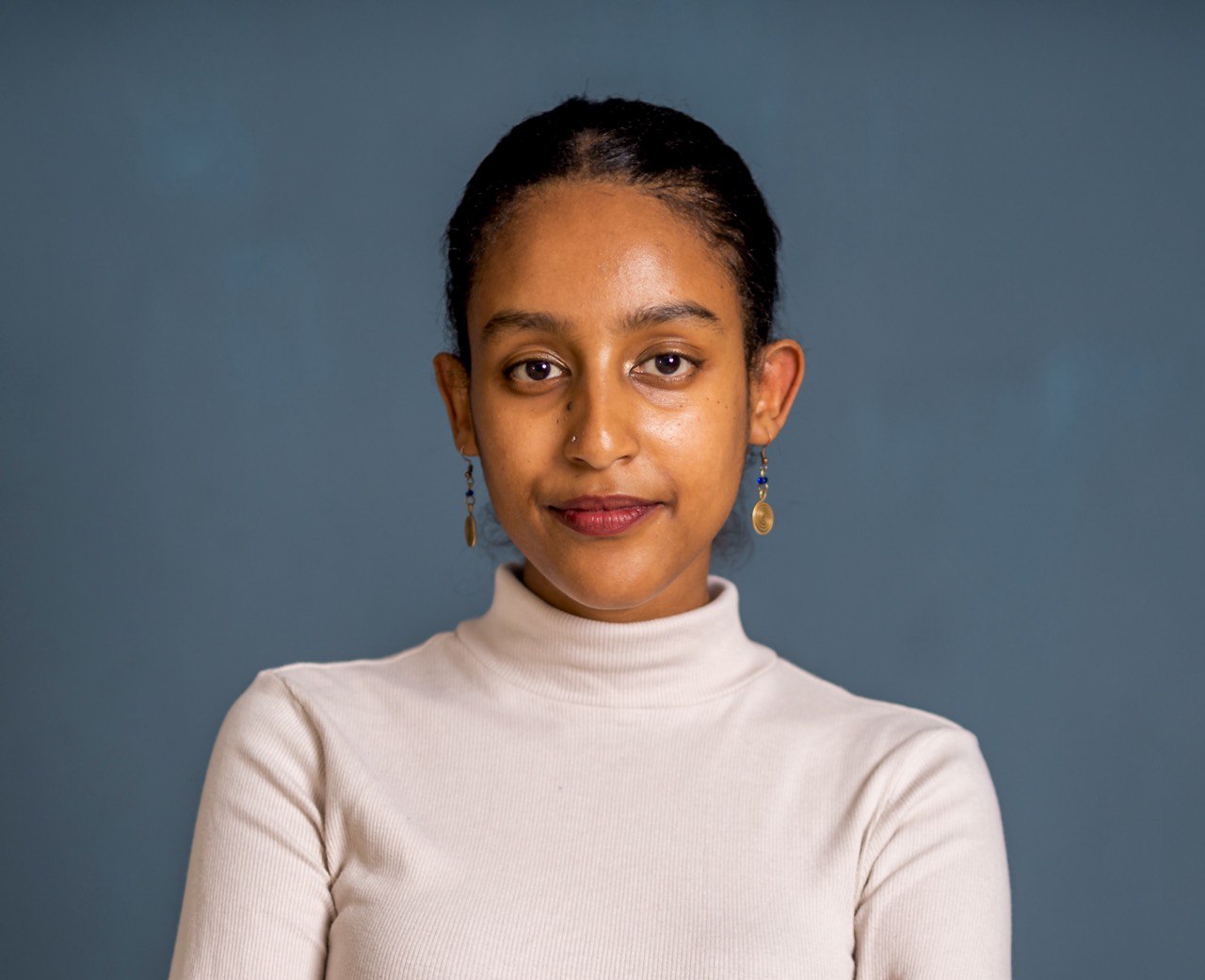
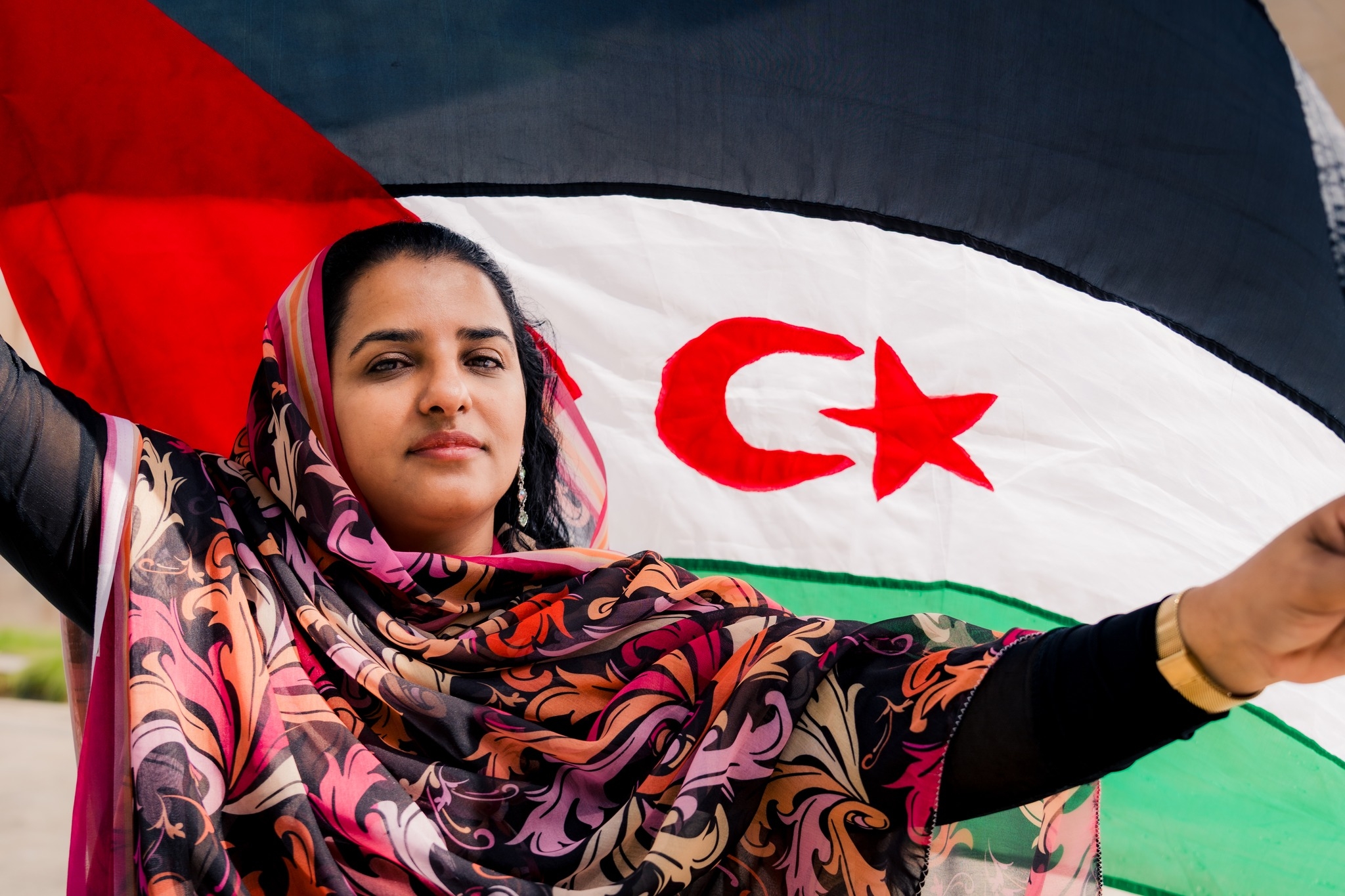
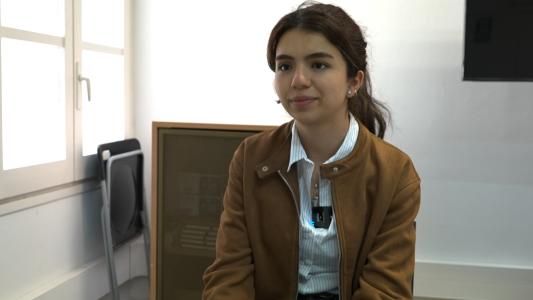
Zaina Qazzaz, aged 23, is a Gazan journalism student on the UB Refugi programme at the Universitat de Barcelona (UB). Since November 2024 she has been living in Barcelona, where she is training for the profession of her dreams and, in order to integrate, is working hard to learn Catalan. Although she feels fortunate, she admits she never stops thinking about Gaza, where her family and friends live, and therefore about a life split in two and marked by the Israeli occupation.
Until the age of 17, Zaina lived in Gaza City, in the Tal al-Hawa neighbourhood, near the well-known al-Rimal. With a mother who works as a consultant in the field of human development and a father who is a lawyer linked to the Palestinian Authority, Zaina had a childhood shaped by the conflict. Even so, she enjoyed school, her friends and the beach. An apparently normal life which, in reality, in the open-air prison that is the territory of Gaza, was not normal at all. “As a child I didn’t know what a normal life meant because I lived in Gaza,” she now acknowledges.
Despite having more opportunities than other Gazans, Zaina’s path has not been easy; it has always been marked by the Israeli occupation and her Gazan identity. Her dream was to study in the West Bank. And she achieved it, becoming the first Gazan to do so in five years. “Imagine how difficult it is. You have to get lots of permits, and you have to pay a lot of money. My family started arranging the documents three years before I left,” she recalls of the bureaucratic obstacles. “In the end, I got across the border after three failed attempts in which I was refused entry. I was in the West Bank on a three-month permit and remained there irregularly for five years,” she adds. Despite the mobility problems caused by her illegal status, which limited her fieldwork placements, Zaina was able to study journalism.
“I remember that sometimes the Israelis would come to the university and my friends would hide me, as if I were doing something wrong. Gaza and the West Bank are both in Palestine, but it is very difficult to move between them,” the young woman explains, who had to give up returning home for three years in order to take up the UB Refugi scholarship. Now in Catalonia, this young woman, who has taken part in a 3Cat documentary about Palestinian students, is grateful for the popular support for Palestine in Catalan universities and streets.
Like many other people, Zaina faces the Israeli State, which is undemocratic towards the Arab or Palestinian population. The three years that she is supposedly going to spend outside Palestine could in reality be more: if the situation keeps deteriorating, it could be a lifetime. It depends on opportunities, the very ones the occupation denies the population in Palestine. For now, Zaina contributes to eldiario.es, sees journalism as a form of resistance, and lives in a residence in Barcelona where the sea gives her back a piece of Gaza.
‘Greater Israel’ and the genocide in Gaza
On 7 October 2023, the Palestinian organisation Hamas attacked an Israeli electronic music festival in occupied territories. Since then, despite the peace agreement signed in October 2025, Israel has been indiscriminately bombing the population of Gaza. At least 69,000 people have been killed, according to the authorities of the Palestinian enclave. More than 19,000 of them are children. These attacks have no possible justification and constitute genocide, as the UN Special Rapporteur on the situation of human rights in the occupied Palestinian territories, Francesca Albanese, keeps repeating. Or, at the very least, they are crimes against humanity, which is why the International Criminal Court has issued an arrest warrant for the Israeli prime minister, Benjamin Netanyahu. However, these displays of justice are of no use when the West colludes with Israel’s historical goal: for all Muslim Arabs to leave Palestine, so as to establish ‘Greater Israel’, which would also include territories in Syria and Lebanon.
Israel was born as a country in 1948 in territories that had been part of the Ottoman Empire and had been under British protectorate for decades. It was in the British Isles that Zionism resolved to conquer its promised land. To do so, it needed to send settlers and expel the Muslim Arab majority. Thus, Palestine’s ancient Jewish Arab community was diluted among European and Russian settlers who cultivated the desert or built cities such as Tel Aviv. More and more settlers arrived who, over time, would carry out armed subversive actions against Arabs and the British in pursuit of a state of their own. After the Second World War, in 1948, the international community recognised Israel. It was then that the fiercest occupation began, with clashes between Muslims and Jews that led to the Nakba, the expulsion of more than 700,000 Palestinians from their homes, and to wars that Israel would always win.
Although the international community officially supports the two-state solution, one Jewish and the other Muslim, Israel has done nothing but torpedo any agreement, such as the one that seemed possible with Yasser Arafat at the end of the 20th century. Now Israel says it will annex new territories in the West Bank. One more step towards expelling the Arab population, which has no place in its project of a homogeneous country.
To this end, Israel has spent decades harassing the Palestinian population and occupying its territories. The tactic in Palestine is twofold. In Gaza, using Hamas as an excuse, every so often an offensive is launched in which the population’s progress is destroyed. The current genocide is one step further. In the West Bank, by contrast, the occupation is less explosive but more constant. Palestinians suffer attacks every day, as the Oscar-winning No Other Land masterfully portrays, attacks that prevent them from prospering. Every advance is followed by an attack by settlers acting with impunity who force people to flee. In both cases, in Gaza and in the West Bank alike, life is a constant starting over that leaves people without hope.
INTERVIEW
Gaza is the most dangerous place in the world to report from. Of the 129 journalists killed in 2025, two thirds died as a result of Israeli attacks. Why did you decide to study journalism and what did your family think when you told them?
My parents let me choose what to study. My mother is an artist and wanted me to study art, and my father wanted me to do something related to computing. I studied computer science for a year, but it didn’t motivate me. At that time there was a journalist [from Al-Jazeera] called Shireen Abu Akleh. Israel shot her in the head while she was reporting in the Jenin refugee camp. After that, I called my parents to tell them I wanted to change degrees and I started journalism. I feel it has been the best decision I have ever made. I studied for three and a half years at Birzeit University. I still remember one time when, in a refugee camp in the West Bank where the soldiers came and where I was interviewing a family, people who didn’t know me at all took me into their home for a day. I explained to them that I was there irregularly and that the Israelis could not detain me, and they took me in.
You lost your grandparents and an uncle during the genocide in Gaza. How does the constant violence Gaza has suffered for 80 years shape people’s lives?
I lived in Gaza for 17 years, and in that time I went through five wars. This genocide is different, but I particularly remember the 2014 war. It was very hard for everyone in Gaza. When you have to leave everything behind in just five minutes… That feeling is hard for anyone to bear. Now, [because of the offensive since 7 October] that situation seems easier. But it isn’t: in Gaza we have electricity four hours a day, and sometimes internet for just one. It’s like being cut off from the world. Everything becomes more difficult. Sending money, for example; that’s why there are alternative forms of payment such as virtual currencies. But it’s not only about electricity, food or water; there is something more important: the feeling of safety, of feeling that nothing will happen to your family. Because maybe you are somewhere safe, but maybe they are not. My grandparents lived near the Red Cross. They were bombed and we couldn’t pull their bodies out of the rubble until a week later. When we spoke to the firefighters, they told us the priority was saving people who were still alive, not those who had already died. And that was extremely hard.
Do you understand why Israel acts with such a lack of humanity?
No one could have imagined this lack of humanity from Israel. The Israeli army does everything it can to make our lives difficult. Everything there is a constant struggle.
In addition to Trump’s Board of Peace, Israel wants to rebuild Gaza to attract tourists to the so-called Gaza Riviera. What do you think about these projects and what role will the Gazan population play?
People reach a point where they feel they can no longer do anything. They cannot live. They have lost three years of their lives. So they want to carry out their own projects, because they have lost everything: their homes, their loved ones. However, these projects we see in the news will not be carried out as soon as they say. Now it seems there are people ready to rebuild Gaza when Trump makes the decision, but this has been talked about countless times and nothing has happened.
The two-state solution seems further away than ever. What future awaits Palestine?
Unfortunately, I feel that people in Gaza will end up adapting to the life they have now. I would like to add that migration is not the solution. After every war there was talk of rebuilding Gaza, but nothing has happened. Moreover, we face three controlling forces: internal division, Trump and the Israeli army. In the end, people adapt to life. For example, during Ramadan, homeless people eat in the street and, sadly, even that has started to be seen as normal. I fear that one day even not eating will be considered normal. However, war is not something you can live with or that a person can adapt to.
Israel tries to portray Hamas as a terrorist group. It is not that simple: Hamas won the last elections held in Gaza in 2006 and, although it is accused of religious conservatism, it has the support of the population. What does Hamas mean to the people of Gaza?
I was about five, in first grade at school, when I first heard what Hamas meant. I was at home; my father and his friend were having breakfast, and suddenly some people arrived. My father worked for the Palestinian authorities, and these people, who were from Hamas, took off his clothes, blindfolded him and took him away. They kept him in prison for days, for no reason. My father is not a political person, but he is a lawyer for the Palestinian Authority (PA). That was the first time I understood what Hamas meant. However, as a Gazan, I cannot say they are terrorists. There is the occupation, and there is Hamas.
They were the authority in Gaza.
Yes. The PA is not attractive to people.
The PA controls the West Bank and favours a negotiated solution. That is why it is seen as a collaborator with Israel.
That’s right. In the film The Voice of Hind Rajab you can see how the Palestinian authorities carry out security coordination with the Israeli army. They work together. They all do. Another example, from real life: there are some politically active students who have been identified by the Palestinian authorities and who, later, ‘by chance’, have been arrested by the Israeli army. What a coincidence!
Israeli society has not condemned the genocide. Is reconciliation between the Palestinian and Israeli communities possible?
No, reconciliation is impossible. Before 7 October, I might have hoped for some kind of coexistence within the framework of the two-state solution. But as things stand now, it is impossible.
Like the European Union and the United States, most Arab countries side with Israel. What do you think of their position?
The Arab governments are not helping us. When people tried to flee the war, the border crossing between Gaza and Egypt was kept closed, and they didn’t let anyone in. Diplomatically, this was presented as a positive stance by Egypt to prevent the displacement [of Gazans], but in reality they abandoned the territory of Gaza, without any humanity whatsoever. We are only talking about humanitarian aid, it is not something impossible, but they didn’t even do that. Saudi Arabia, Egypt, Jordan: all of them could do more to help the people of Gaza.
 Xarxanet.org · 22/05/2026Zaina Qazzaz “L’ocupació no només ens assassina, també mata la nostra veritat”Read ↗
 Diario Tarragona · 14/04/2026Zaina Qazzaz, estudiante palestina: “Mi familia en Gaza es la que me da ánimos a mí”Read ↗