If not even your family stands by you, neither will the people of Guadalajara.
Lots of people see me at a demonstration, putting up posters or at the Prosecutor’s Office, but they tell me they were taken for a reason, that I wasn’t able to look after my children. In other words, there are lots of people who don’t help me, who blame me.
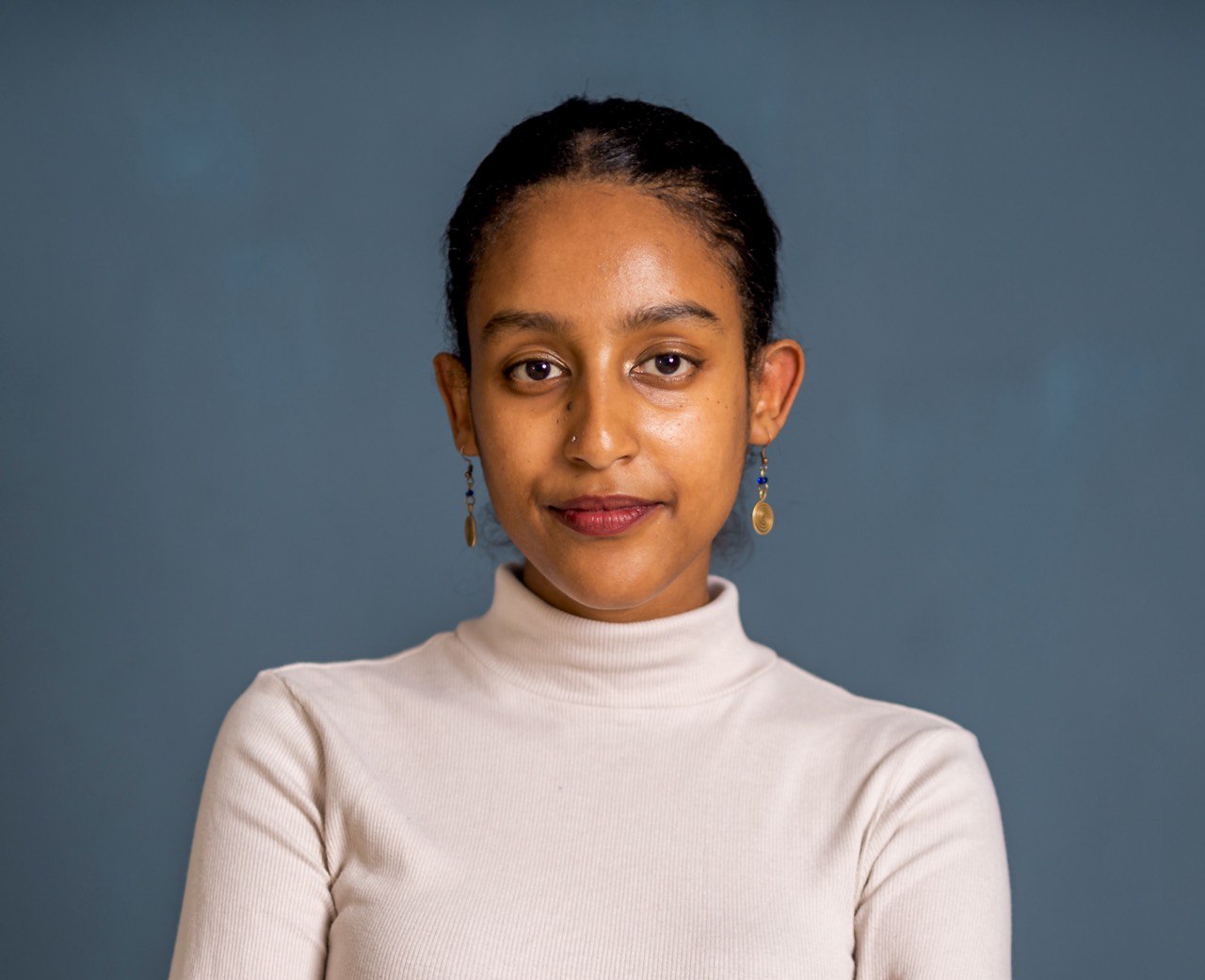
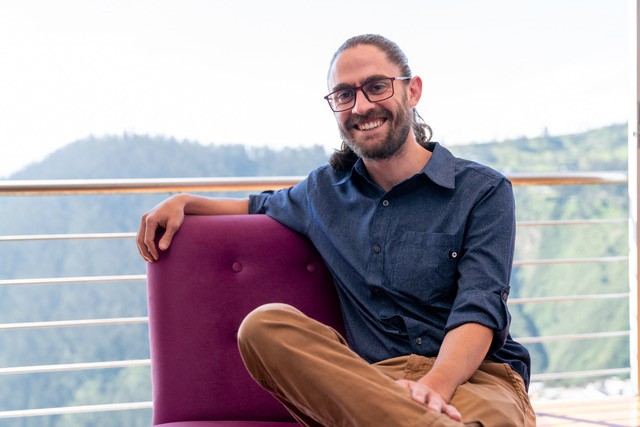
Itza López is a young Nicaraguan woman who has been living in exile in Barcelona since 2020. Through her story, the documentary ‘El viatge d’Itza’ addresses the human rights crisis in Nicaragua and the forced exiles under the government of Ortega and Murillo.
“It’s not that we decided to stop the protests; our safety was at risk, and the next step would have been to die for what we believed.”
Itza López Borge was born in 1997 and grew up in the Bello Horizonte neighbourhood of Managua, the capital of Nicaragua. A Nicaraguan activist in the movement at the 19 April National Agrarian University, she took part in the 2018 protests against the autocrat Daniel Ortega. After years of resistance, constantly moving house to evade the authorities, the growing repression left her no choice but to flee Nicaragua, and she went into exile in Barcelona in 2021. The protagonist of the documentary El viatge de l’Itza, produced by Fora de Quadre and Cabal Films, her story helps us understand the drift of Ortega’s regime, the bittersweet taste left in the mouths of the brigadistas who romanticised and took part in the Sandinista revolution, and the effects of forced exile on the Nicaraguan community.
Itza, whose name was inspired by the book La mujer habitada by Gioconda Belli, is the youngest daughter of a family that believed in the Sandinista revolution. Her father, a Catalan, did his university research on agroecological processes in Nicaragua. After spending time there during the war, he came to identify with the ongoing revolution, and returned to settle there for good before the 1984 elections, the first democratic ones after decades of the Somoza dictatorship. While in charge of a United Nations project, he met the woman who would become his wife, Itza’s mother, “a woman from San Miguelito, on the San Juan river, on the border between the Southern Caribbean and the Pacific”. “My mother took part in the revolution and was a dance teacher at the National Agrarian University. And that’s where they met,” Itza recalls.
Her father lived in Nicaragua for nearly 25 years and directed aid projects for international institutions. In 2014, by then disillusioned with the revolution, a government agent advised him to leave Nicaragua. And so he did, without his family, returning to Spain. He died in 2020, shortly before Itza, who holds Spanish nationality, arrived in Barcelona as an exile.
In Catalonia, Itza faces the problems that shape the lives of most migrants. Because the Spanish State would not recognise the credits from her degree in Tourism for Rural Development, which she was one semester short of completing in Nicaragua, she had to enrol for a year at a Catalan university. It cost her 7,000 euros. She then worked for 18 months on a social and solidarity economy project. And recently, with her bicycle, she became a delivery rider. The kind of instability typical of someone still looking for their place in an unfamiliar setting.
“We still have to film the second part of the documentary, which is about exile in Costa Rica. That’s where life is hardest. A few weeks ago Roberto Samcam was murdered there. The Costa Rican Government doesn’t want to get involved and the opposition feels unsafe. There’s no financial support, and there are lots of Nicaraguans living on the street,” Itza explains, adding: “In the end, those of us in exile in Europe have a different kind of privilege from the people in Costa Rica.”
Nicaragua and Daniel Ortega’s authoritarian drift
Nicaragua is a Central American country bordered by two oceans, the Pacific and the Atlantic, where society seems resigned to the absolute power of Daniel Ortega, one of the leaders of the Marxist Sandinista National Liberation Front (FSLN), the organisation that in 1979 helped to overthrow the long-standing Somoza dictatorship and later defeated the US-funded Contra paramilitaries.
Daniel Ortega, winner of the first democratic elections in 1984, has steadily eroded Nicaraguan democracy to consolidate his power, especially since returning to office in 2006. Since then, the Sandinista leader has repressed every opposition voice and reformed the laws to perpetuate himself in power. Because of this authoritarian turn, his former allies from the revolution have abandoned him, and many have been forced into exile. With no checks and balances, the last display of popular resistance came in 2018, when pent-up discontent erupted over a Social Security reform. For months, university students barricaded themselves in their faculties and withstood the violent practices of the authorities.
355 people dead and more than 2,000 injured is the toll of a period that was followed by negotiations between social groups and the Government. Nothing worked; and Ortega, now facing no resistance on the streets, launched his latest offensive after the 2021 elections, when he imprisoned the main opposition figures and forced them into exile. The list includes families that have been key in Nicaragua’s history and reflects the division created within Sandinismo. Prominent among the exiles are the writer Gioconda Belli, the journalist Carlos Fernando Chamorro, Bishop Silvio Báez and the former Sandinista guerrillas Luis Carrión, Sergio Ramírez, Dora María Téllez and Mónica Baltodano Marcenaro. Former Nicaraguan president Violeta Chamorro also recently died in exile.
Since 2018, it is estimated that more than 600,000 people have had to flee Nicaragua. Most of them are ordinary, anonymous people: the older ones saw one dictatorship fall and another take shape; and the younger ones have known no other figure than Daniel Ortega.
In 2018 protests broke out over a Social Security reform. What was the trigger?
In Nicaragua, most young people live with their grandmothers because their parents have emigrated to Costa Rica, the United States or some other country. The grandmothers bear the financial burden, beyond what the parents send. That’s why the reform also affected young people, who took to the streets to protest alongside their grandparents. It all exploded on 18 April 2018, when some young men from a private Jesuit-run university, the Central American University, were beaten. That same night we occupied the university where I was studying, although we did it legally, with the rector’s permission.
Knowing that Ortega couldn’t be trusted, why did you stop?
In the first few days there were attacks, but they weren’t so bloody. People weren’t dying, although they could put out one of your eyes or make someone disappear. Overnight, the Government began clearing all the premises and ordered the security forces to use greater force. We young people tried everything. The country was half paralysed for seven months, but between October 2018 and February 2019 the Government launched its clean-up operation, just as Somoza used to do. It’s not that we decided to stop; our safety was at risk, and the next step would have been to die for what we believed. We had to find another way to fight. We formed the Civic Alliance, which brought together business people and students. The Blue and White National Unity was also born, made up of people from the MRS, dissident Sandinistas, who didn’t want to be in the same organisation as the business people. We tried, and for the elections we created the National Coalition, which included the Civic Alliance, the Blue and White National Unity and the rest of the civil movements. We put forward a candidate, who was going to be Félix Maradiaga. He was disqualified. We put forward another, Juan Sebastián Chamorro, who was also disqualified. We decided to look for another vehicle, and we jumped on Kitty Monterrey’s, an ultra-conservative woman I didn’t like at all.
And Ortega got his best result ever, 75%.
But only 37% of the population voted. And of those, probably only 10% actually voted for Ortega. There were lots of dead people on the electoral rolls. What’s more, they placed people at the polling stations, a Sandinista from the neighbourhood who wouldn’t let you vote if you were in the opposition.
Today Ortega is moving away from left-wing ideological currents. He has even become an ally of the Church. How do you view his relationship with the Church?
Nicaragua is a very Catholic country. After returning to power in 2006, Ortega negotiated with the Church; he needed parishioners. He said he would outlaw abortion if the churches asked people to vote for him. They made a pact, and Ortega banned abortion completely, even therapeutic abortion, not even for a 12-year-old girl who was the victim of rape. That pact broke down in 2018, when the Episcopal Conference convened the National Dialogue. The Government began linking the Church with the opposition, and now it fears Catholic gatherings and festivities. In fact, it doesn’t allow large religious processions. But before 2018 they were close friends: the Church attended every Government event, and the Government used any festivity to campaign. The slogan was: Nicaragua: Christian, socialist and in solidarity. Now the Government is evangelical.
When you emigrated in 2021, why did you do it? Had you lost hope?
No, after the elections they started persecuting activists. There weren’t many options left, and I wondered what I would do if I ended up in prison. They had arrested two of my male friends, and two of my female friends were imprisoned and subjected to humiliating things: they were photographed naked; male police officers carried out their body searches; they were kept for several days without food. I didn’t want to go through that. But I always say that the Nicaraguan revolution [against Somoza] was planned by a group of 40 intellectuals, most of them exiled in Costa Rica. That’s why it’s important to create spaces for Nicaraguans, where we ourselves decide what we are going to do. Activism in exile is difficult: either you work or you do activism. But if we don’t sit down together, we’ll never get rid of Ortega.
Important Nicaraguan figures are in exile, many of them in Costa Rica. Can you tell me about this lesser-known diaspora, about people like you?
There are loads of exiles in Costa Rica. There are lots of young people. Life there is very expensive, we call it the Switzerland of Central America, and Nicaraguans live in precarious situations. There aren’t many jobs, just like here in Barcelona. A very famous musician, don Luis Enrique Mejía Godoy, who has well-known songs from the revolution, lives in extreme poverty in the United States: he paints pictures, sells them online, gets by doing little things; for the documentary we asked him to do an introduction for us, and he performed part of a song.
And in your case, what was the process of integration in Barcelona like?
I went to my grandmother’s house. It was hard for her, as she had been used to living alone for many years. And hard for me, because I was living with a woman who hadn’t brought me up; I used to see her once every four years. We didn’t get along, and after three months my grandmother threw me out of the house. With no job, I turned to my Nicaraguan network. I stayed at a friend’s place for a month, until I found work at McDonald’s. When I started having a bit more money, we rented a flat in Sants. So far, I’ve had time to work and survive. Right now I’m out of work; I was working as a bicycle delivery rider, but I had to give it up: I had a nervous breakdown from exhaustion during a heatwave.
What do you miss most about Nicaragua?
How easy it is to do things without money. Here everything is very capitalist. You need money for everything. I don’t fit into such a consumerist world. And of course, not having financial means makes it hard for me to make friends. I have my circle of friends, mostly Nicaraguans, and it’s not that I don’t want to socialise, it’s that I don’t have the financial means to keep up with people.
You are the protagonist of the documentary that tells the story of your exile. How did you end up joining this project?
Neus Ràfols, a journalist who contacted me to interview me for an article about Nicaragua, told me there was a possibility of filming a documentary and asked me if I’d like to take part. Her idea was to explain the relationship between Catalonia and Nicaragua, but I told her she couldn’t forget the betrayal of the revolution. And so, with me chipping in, El viatge d’Itza came about, which tells everything we’ve talked about through my story.