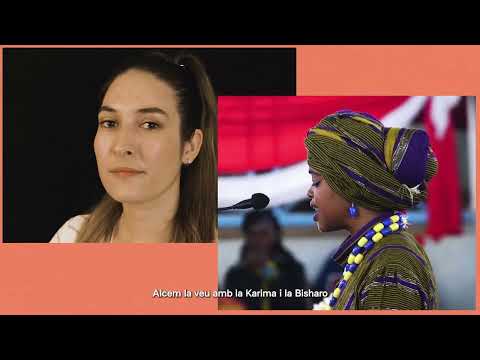
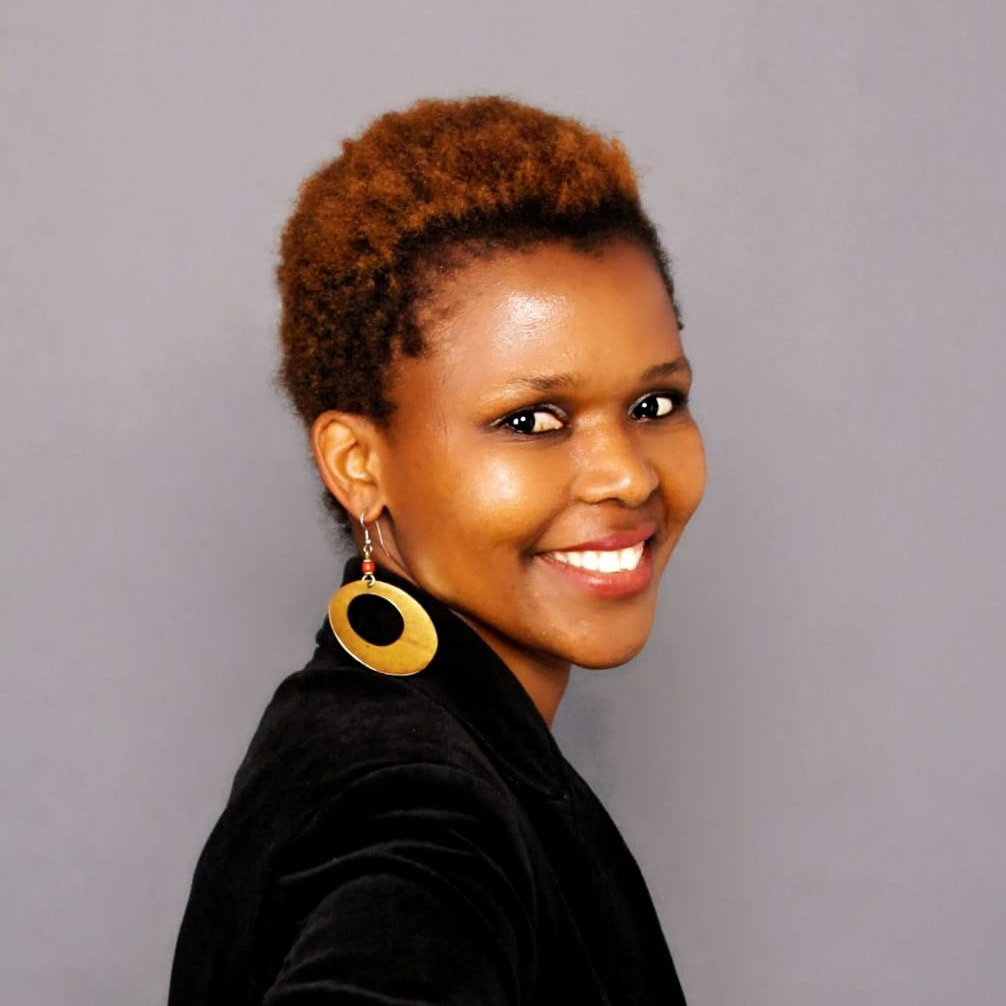
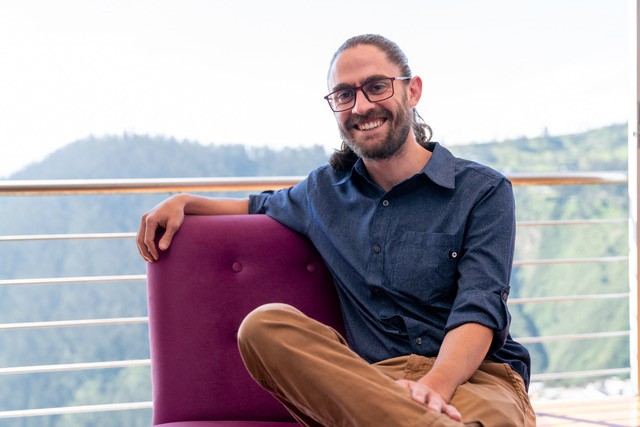
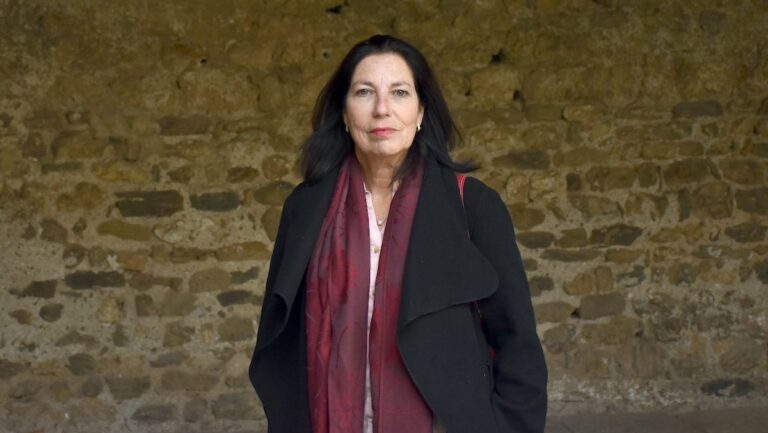
Iris Gur is an Israeli activist for peace and human rights. An educator by profession, she has led organisational and pedagogical processes and changes, placing the emphasis on the strengths and needs of both individuals and society. She taught for twenty-two years in secondary education and also worked in primary education, both as a teacher and as a head teacher. She retired two years ago.
She had grown up and lived all her life in a conservative city, within a Zionist family of Holocaust survivors, without ever questioning what was happening to the Palestinian people who lived in the territory or who had had to flee after the creation of the State of Israel in 1948. Her activism and her actions for peace began, as she herself explains, in 2017, when her youngest daughter refused to do military service, which in Israel is compulsory for both men and women. It was then that she decided to join Combatants for Peace because she thought that if she wanted to make a change, she had to do it with them, with a binational group made up of Palestinians and Israelis.
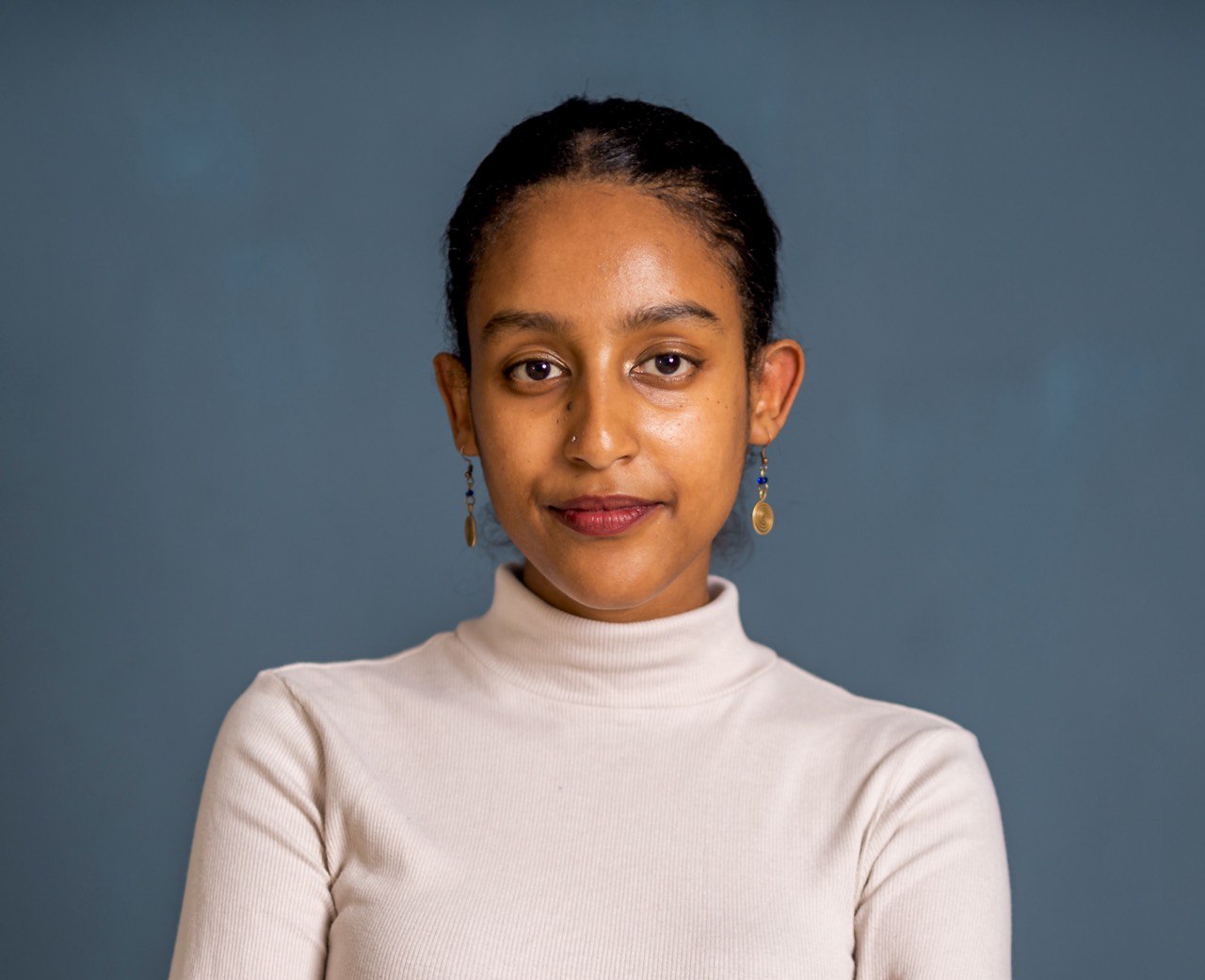
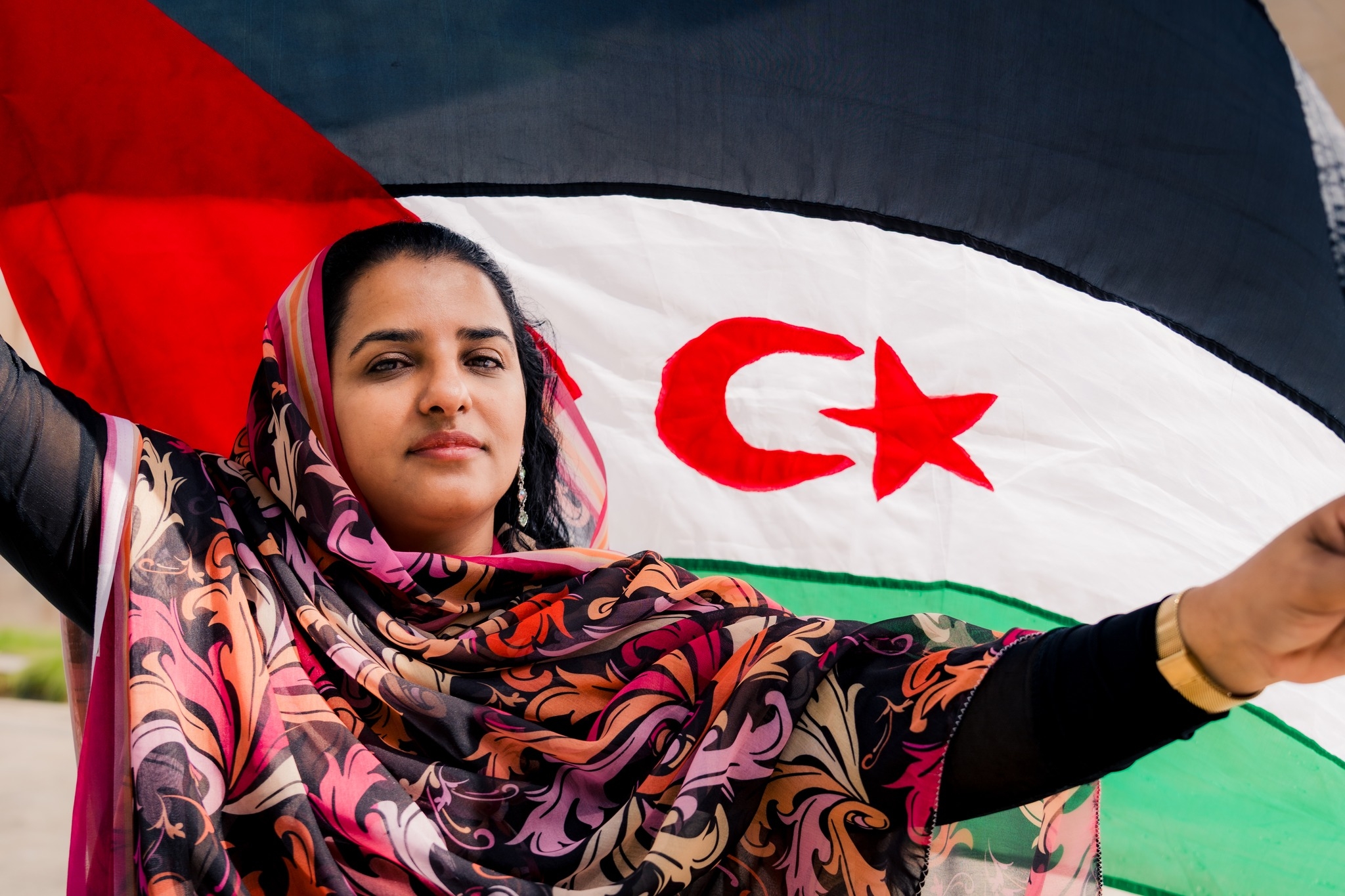
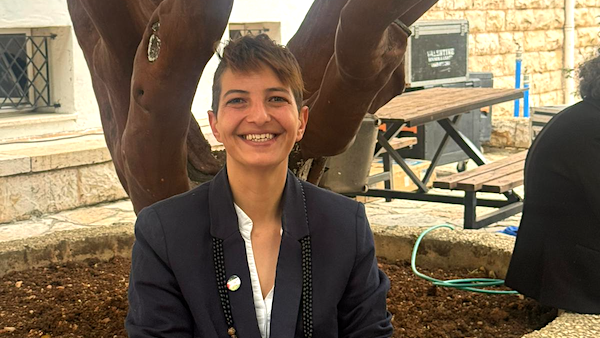
Mai Shanin is a therapist and peace activist from Al Eizariya, in the West Bank. The daughter of Palestinian fighters, she had to face the reality of war from a very young age. In fact, she was only a teenager when, during the Second Intifada (2000 – 2005), the Israeli army was building the separation wall marking the boundaries of the occupied West Bank, and her immediate reaction was to opt for violent resistance. “I chose the path of violence”, Mai admits, recounting those years.
However, after her university studies in psychology and a chance encounter with the organisation Combatants for Peace in 2013, she gradually gained another perspective on the conflict she was living through and began to see the path towards a peaceful, non-violent approach. She decided to exchange the strategy of violence for another equally powerful means: the word. Having specialised in non-violent communication, today she trains young Palestinians in this field, to bring more voices and energy to this grassroots movement that calls for peace, freedom and dignity for both peoples.
Combatants for Peace, an initiative founded in 2006, is a grassroots movement of Israeli former members of the Israeli army and Palestinian former combatants who work together with a single goal: to end the occupation and oppression and achieve peace. Through non-violent civil resistance, education and activism, Combatants for Peace seeks to dismantle systems of oppression for a freer future. One of the distinctive features of this initiative is that it was founded by former combatants from both sides, hence its name. The organisation —its Israeli staff work from Tel Aviv and its Palestinian staff from Beit Jala— has been nominated for the Nobel Peace Prize on two occasions: in 2017 and 2018. For almost two decades, its message has been the same: there will be no solution to the conflict as long as there is violence.
Among the activities and projects they organise are the Joint Nakba Commemoration Ceremony and the Joint Memorial Ceremony, organised by CfP and the Parents Circle – Families Forum. This is the largest peace event organised jointly by Israelis and Palestinians.
The conflict in the Palestinian territories dates back to the period after the First World War and the Balfour Declaration of 1917, which established the creation of a national home for the Jewish people in historic Palestine, then part of the Ottoman Empire. But if there is one definitive date as the starting point of the conflict, it is 1948, once the Second World War had ended. After the genocide perpetrated by the Nazi regime against Jewish men and women, there was broad consensus on the birth of the State of Israel in historic Palestine. More than 700,000 Palestinian men and women had to leave for neighbouring countries such as Lebanon, Syria or Jordan. The Zionist forces of the time wiped out entire Palestinian towns and villages, an ethnic cleansing that used colonial and apartheid methods. This is what is known as the Nakba, ‘the catastrophe’.
On 22 November 1967, the United Nations Security Council unanimously approved Resolution 242, which calls on the State of Israel to withdraw from all the Arab territories occupied as a result of the Six-Day War of 1967. This resolution refers to the “inadmissibility of the acquisition of territory by war”. The United Nations Resolution 194 of 1948 had already recognised the right of the Palestinian population to return to the territory occupied by Israeli settlers. Despite these two resolutions, however, the State of Israel has not only never returned the territories it took from the Palestinians, but over the years has been extending its expansionist policy through new illegal settlements. Resolution 242 refers to the establishment of two states, which could bring an end to hostilities, but for the moment this option is not on the table.
Before the war in Gaza broke out, and according to UNRWA, the United Nations Relief and Works Agency for Palestine Refugees in the Near East, there were around six million Palestinian refugees spread across the world. Also according to UNRWA data, a third of these five million people live in the organisation’s own refugee camps.
On 7 October, an attack by Hamas, which governs the Gaza Strip, on the Israeli population triggered a war that continues to this day. The response of the State of Israel was swift, and since then the attacks on and siege of the Palestinian enclave have not stopped. It is estimated that this war has already claimed more than 30,000 Palestinian lives. The result is the annihilation of Gaza’s population, through bombs, but also through hunger, since from October onwards the arrival of humanitarian supplies and food has been very limited. The first cases of children dying of starvation have already begun to be documented. Faced with this situation, the international community, led by a United States and a European Union that are complacent towards Israel, has not passed any resolution or initiative to put an end to the massacre; quite the contrary: they have continued to send weapons to the Israeli army.
Iris, the narrative in Israel about the Palestinian people is very specific. What was it like for you to break with that narrative and take a stand in favour of understanding and peace, in relation to those around you?
I did not work at the school in my own city, which is very conservative. I was lucky because the school is in a much more liberal city. I am now writing about this experience. I was very lucky with my surroundings, but I had to go and give statements at the Ministry of Education a couple of times because they wanted to dismiss me. I think that in this whole process my daughter suffered much more than I did, because I was older, I am very strong and I am self-confident. I do have a lifelong friend who stopped speaking to me when I began my activism. Now we have no relationship.
Mai, as a Palestinian activist working alongside Israeli activists, how do those around you, the Palestinian community, perceive your work, especially now during the conflict?
My work has always been received very respectfully by my community. In my surroundings and in my community we do not distinguish between religion or diversity of identity. We value everyone who is by our side and fighting for our freedom. We support the idea that this land is for Jews, Christians and Muslims, for everyone, because ours is a struggle against occupation and oppression, and not against Jews at all. In my activism this aspect is key, and because of it I have always felt very respected by my people and my colleagues.
One of the spearheads of peace is the education of new generations. At Combatants for Peace, do you work with children in order to generate new narratives of understanding and empathy?
Iris: For the past three years there has been a project called Freedom School, but it is for young people aged 18 to 26. There is one in Israel and one in Palestine. In Israel, after this training, the young people continue to be activists or work in NGOs for peace or other initiatives. The work on the Palestinian side is more complicated, because the people who take an interest are branded as traitors. We have another project for educators that consists of offering training. This one only takes place on Israeli territory; it has not been possible to develop it on Palestinian land. Now, [with the war in Gaza] everything has become very complicated, and even on Israeli territory it is impossible to go into schools to work with teachers or students. Even when I was working as a head teacher, you could only organise projects with Palestinians who are registered as Israelis. In the whole of Israel there is only one bilingual school [Arabic and Hebrew] where Arabs and Jews study together. But they are not Palestinians: they are Arab Israelis.
On 7 October the war in Gaza broke out. As these lines are being written, more than 30,000 Palestinians have been killed and there are still Israeli hostages who have not been released. For the moment, there does not seem to be any peace initiative.
Iris, how are you experiencing the situation as an Israeli citizen, but also as a peace activist?
I am answering you with tears in my eyes. The days after 7 October were extremely difficult for me, as a human being, as a citizen of Israel and as a peace activist. My world fell apart and I had to go through a process, both with myself and with my colleagues at Combatants for Peace. I am very proud of the process we went through. I knew people in Gaza; so did my daughter, and she has lost friends. On the other hand, my family suffered the Holocaust and this war takes me to very dark places. And I will say it: the State of Israel is recreating the Holocaust. We Israelis, instead of having learned that we must work for human rights and peace, are doing the same thing. We are carrying out a genocide. Perhaps not according to the parameters of what a genocide is, but that is how it is. We have the power, we have the weapons, we have the capabilities and we are doing it. If we do this, we do not deserve to have a State. That is a personal opinion. Finally, I think we are toys in the hands of the United States and Europe. Neither Israel nor Hamas is independent in terms of weaponry. If they want [Israel] to stop, they should stop sending weapons.
And you, Mai?
It saddens me to see that, if we look at the whole historical process, there has not been a very strong political initiative for peace in this land that could combine the demands of both sides, that would be in favour of the freedom of both sides and against oppression and occupation of any kind. At the same time, there are organisations and initiatives such as Combatants for Peace and courageous families who have been fostering change, trying to build a non-violent resistance movement, a sense of unity. This is the biggest peace initiative, an initiative that comes from the people, from civil society. Then there are other governments that have defended us, such as Spain and South Africa, as well as other countries that are trying to do something against what is happening. They hold so much political power, and we are very aware of that.
Is there any possibility that the Israeli population might demonstrate en masse to stop the war and in favour of peace?
Iris: I am sorry to say no. Israeli citizens, the majority, cannot see the suffering of the Palestinian population. Peace activists are a minority; we do not even have a party in Parliament. The families of the hostages also want the war to end. Even they are insulted. And as for demonstrating… that will not happen; there have been too many years of a single narrative, of a very specific education, with a single version full of racism, superiority, ignorance and fascism. I feel guilty because at some point I too reproduced that narrative. From a political point of view, it must be understood that Benjamin Netanyahu [Prime Minister of Israel] does not want to stop the war, quite the opposite. Both Israelis and Palestinians are prisoners of our leaders.
Mai: We have witnessed demonstrations against the Israeli Government and against the war. We have also seen the threats these people have been receiving. Many of our Israeli activists have been receiving so many threats, and have been living in great fear because of the way they too are perceived, talking about peace and freedom for both peoples. And recently these voices have been growing ever stronger. We hope there will be mass protests against the government and the war.
What is the way forward? If there is no pressure from the international community, if Israel does not want to stop the war, if there is no peace initiative, when and how can the war in Gaza end? What should we expect?
Iris: Since 7 October, I have always said the same thing: history has taught us that when there is a crisis of this magnitude, a window of opportunity always opens. For the Israeli people, this is the biggest crisis since the Holocaust; far more serious than that of October 1973 [Yom Kippur]. History has shown us that when events of this kind occur, other opportunities open up. I believe in a political agreement that stops the conflict and I believe in the coexistence of the two states: the Israeli and the Palestinian.
Mai: If there is no peace initiative, the war will not end, or rather, it will end when everyone has been killed and martyred. The population of Gaza cannot fight alone against the occupation, the oppression and the military. As human beings, this is our moment to rise up together. I believe international pressure has great power to bring about change, but this is also our responsibility. If we do not manage to stop the conflict in Gaza, it will mean that we will not manage to stop oppression of any kind. Because if the war continues here, it can also happen anywhere, as we have also been seeing in Sudan or in many other countries; it is not only in Palestine. The price and the consequences are not only here in this land; the war in Gaza will have an effect on the rest of the world. As for us, as Palestinians we will never stop fighting for our freedom; we believe in justice. Freedom will come, however long the oppression and occupation last. We are finding ways, and the hope is that we find the most peaceful strategy, one based on solidarity, where we are together; this land belongs to everyone, and we are asking for freedom. I believe no one should oppose that.
Mai, how do you manage to keep your hopes up during these dark times?
I do not know if it is hope; I think it is more faith. I have a deep faith in justice and in the value of all human beings, and that we deserve to be free and to have the freedom to choose life, to move, to live in a territory where we are safe, free, respected and honoured. We Palestinians are not only oppressed by the Israeli occupation, but also by the rest of the world. I, as a Palestinian activist, cannot come to Spain and talk about these atrocities without applying for a visa and going back again and again to prove that I will be there to talk about peace, while other people from other countries can visit the country and go sightseeing without these barriers. That too is a systematic oppression being imposed on the people of this land. You have to have a continuous faith that this should end and will end, because it is inhumane; it cannot last. In our family, my brother is married to a Jewish person, and so is my dear friend. That is how it should be.
 FONS · 31/05/2024“Les tanques i els murs no només són físics, també estan a la ment i al cor”Read ↗
 El Cugatenc · 13/05/2024Mai Shahin: “Ara és un moment clau per aprendre a viure conjuntament, des del riu fins al mar”Read ↗
 El Cugatenc · 15/04/2024Iris Gur: “Com a israeliana em costa molt dir-ho, però Israel comet crims contra la humanitat”Read ↗
 iSabadell.cat · 11/04/2024Israelianes i palestines unides per la pau i contra l’ocupació: “no hi ha cases, no hi ha menjar ni aigua”Read ↗