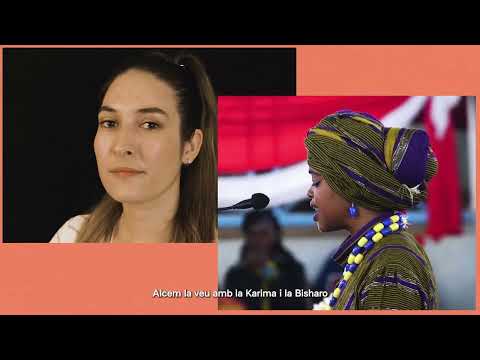
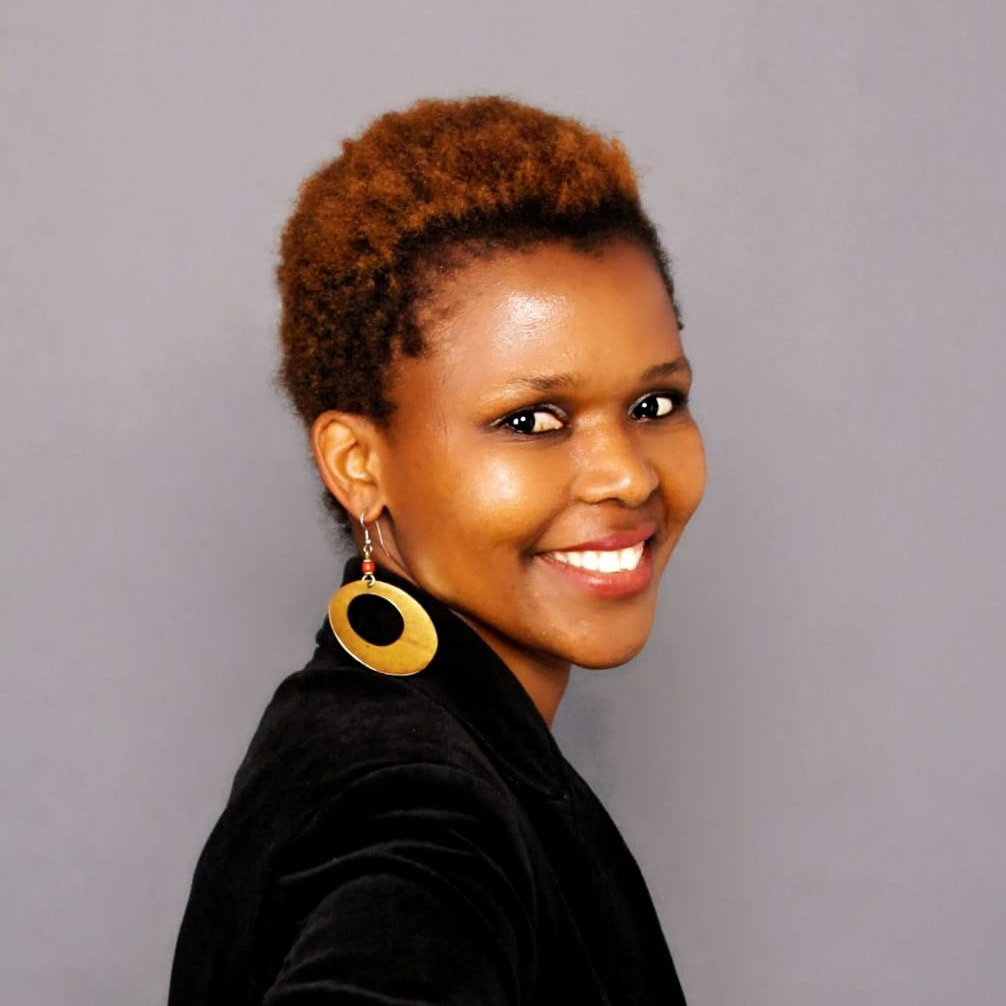
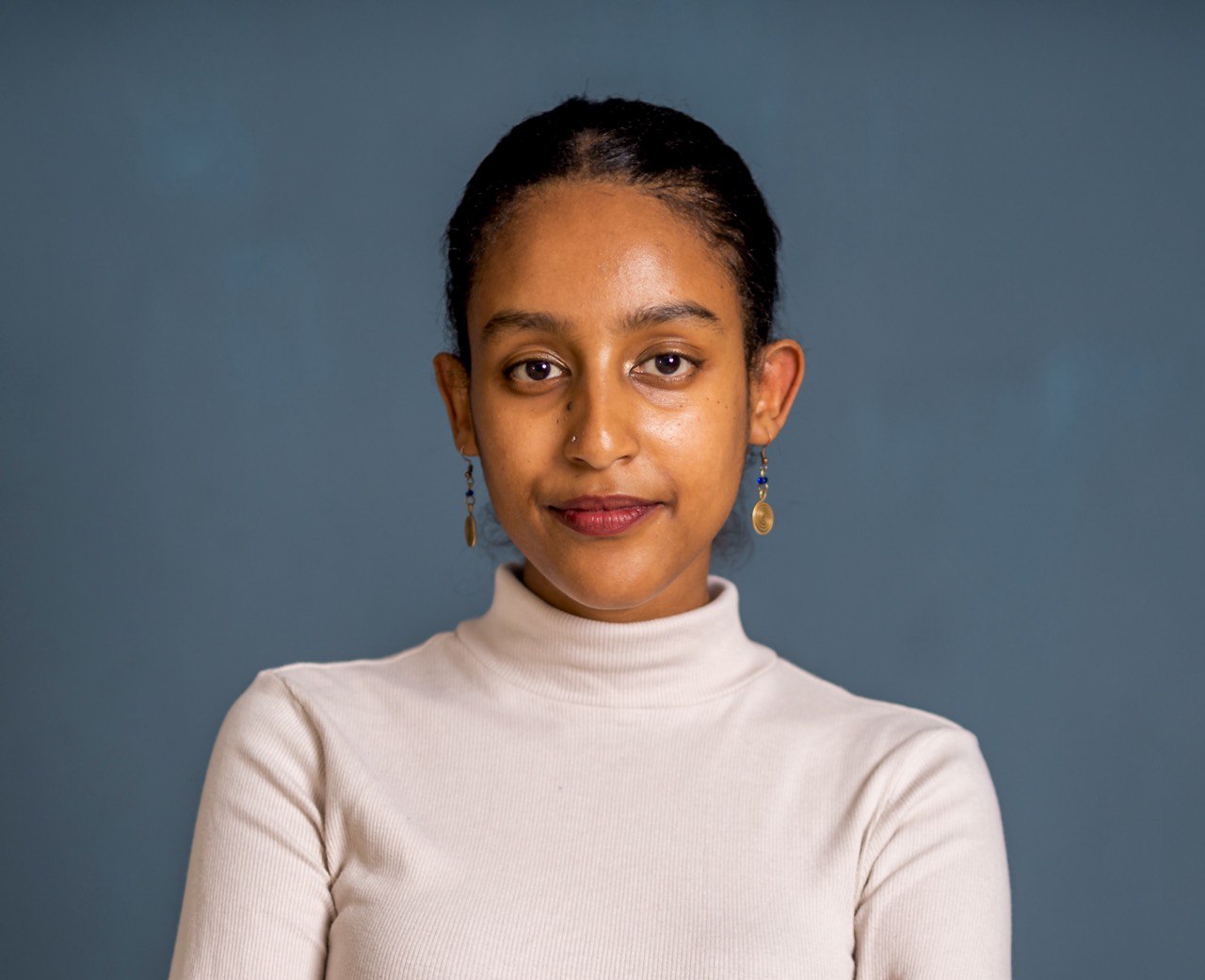
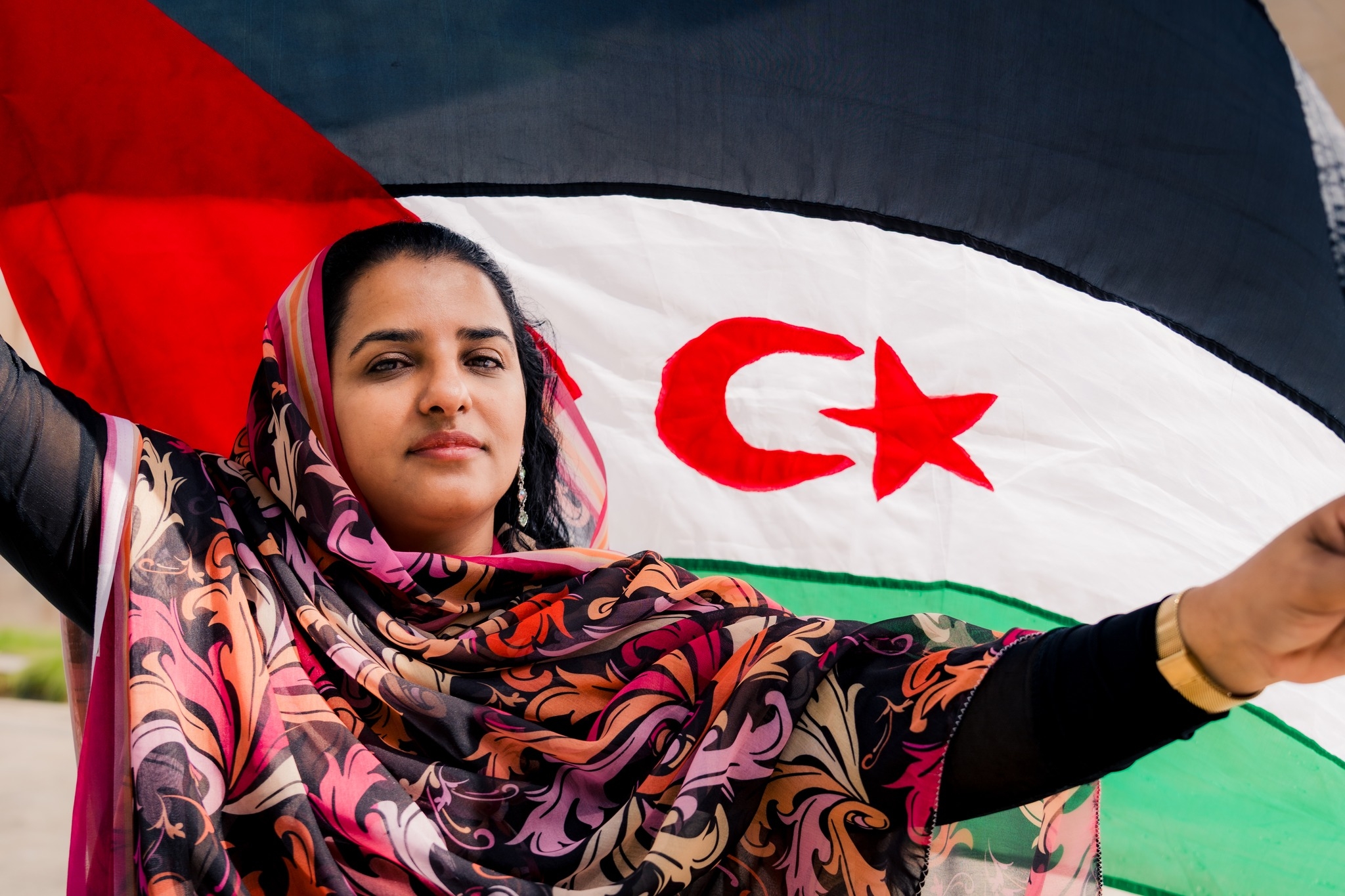
Karima Shujazada (Bamiyan, 1994) is an Afghan journalist currently living as a refugee in Barcelona. In 2000 she moved to Iran with her whole family, but they returned to Afghanistan two years later, in 2002. There, Karima Shujazada completed her secondary education. In 2015 she began studying journalism at Balkh University and graduated in 2018. While she was studying at university, she worked in the field of human rights and also as a journalist. It was then that she began her career as an activist for the rights of Afghan girls and women.
Karima’s life changed radically when the Taliban returned to power in August 2021. Until then, and since 2018, she had worked as a peace facilitator at the organisation Afghan Women’s Talent Development Center, where she ran training and capacity-building sessions for women in both urban and rural areas. With the Taliban’s return to power, she had to give up her job and shut herself away at home. This did not stop her, before leaving the country, from organising several demonstrations for women’s rights. The situation, however, was becoming so critical that Karima Shujazada and her sister decided to flee through the Islam Qala border crossing, between Iran and Afghanistan.
She spent about three and a half months in Iran. There, she and her sister tried to apply for a visa to Europe, but it was impossible; so they decided to go to Pakistan, where she was able to obtain a visa for Spain. In 2022, thanks to the efforts of the organisation Afghan Women on The Run, Karima Shujazada managed to reach Spain and now lives in Barcelona, where she is studying a master’s degree in International Relations, Security and Development at the Autonomous University (UAB). In a recent interview she said: “The Taliban have not changed, but Afghan women have.” For now, she has little hope of being able to return to her country; not while the Taliban remain in power.
Karima Shujazada’s story cannot be told without mentioning the Catalan organisation Afghan Women on The Run, made up of a network of volunteers who, in August 2021, began helping women who wanted or needed to flee Afghanistan. Queralt Puigoriol was the driving force behind this initiative. “It all started when the Taliban returned to power. I saw all those images of people trying to flee on packed planes and everything that was appearing on social media. It was precisely on social media that I saw a young woman asking for help, so I wrote her a message offering to help with whatever was needed. And that is how Afghan Women on The Run was born,” she explains. “From then on, other people started writing to me, as well as other women willing to help. We created a WhatsApp group and began to coordinate.” To date, Queralt Puigoriol and her colleagues have helped some 700 Afghan women leave the country. They do so with voluntary donations from the public, without receiving any other kind of support and organising themselves “as best they can,” she admits. “Over these years we have worked with other international organisations and also with others from the rest of Catalonia and Spain. We also have a sponsorship system of godmothers who help us with monthly contributions that are sent to the women who are in Pakistan waiting for their visa.” Karima Shujazada is one of the cases Queralt Puigoriol holds most dear and is a success story: that of someone who has managed to find her way in the host country and get ahead, look towards the future that awaits her and make the most of the opportunity.
Despite having embassies in various countries and attempts to project a friendlier image, in Afghanistan the situation for women who do not want to follow Taliban precepts remains very dangerous. As various international bodies, such as Human Rights Watch (HRW), have been able to document, since they took Afghanistan in August 2021 the Taliban have committed numerous human rights violations, particularly against the country’s women and girls. HRW has reached the conclusion that “many of the abuses against women and girls constitute the crime against humanity of gender persecution.” Freedom of movement and access to education and work are forbidden for women and girls in the Taliban’s Afghanistan. The repression does not end there: the regime crushes any dissenting voice, has shut down media outlets and has banned the activities of numerous civil society organisations whose work focused on human rights.
Since the Taliban returned to power, UNHCR estimates that 1.6 million people have fled the country. A large proportion of them head to Pakistan, as Karima Shujazada did after her time in Iran. In fact, Iran and Pakistan host almost 90% of all registered Afghan refugees. In Pakistan, their rights continue to be violated: on many occasions, refugees from Afghanistan are forced to return to their country; on others, their documents are confiscated; and on others, they are subjected to mass arrests. As HRW has documented, since September 2023 alone the Pakistani authorities have expelled more than 375,000 Afghan men and women, of whom 20,000 are reported to have been deported to Afghanistan. It is not only newcomers who suffer the repression: “Among those deported or forced to leave are Afghans who were born in Pakistan and never lived in Afghanistan,” the organisation reports. It is also estimated that since August 2021 some 3.2 million Afghans have been internally displaced.
Where do this activism and this desire to empower other women come from?
Already at school I was interested in gender issues. I studied journalism, but I wasn’t very enthusiastic about it. In fact, it was during my degree that I started working as a volunteer in the field of women’s rights. I also worked for a year as a television presenter. Working as a journalist allowed me to get to know other realities of the country. Before, I had never considered that there were girls who couldn’t go to school or who were forced to marry. Once, while preparing a report, I became aware of all these things. And that was when I decided to make activism my work.
And you started supporting women. What did your work involve?
For three years I provided training to women about their own rights, in areas far from urban centres. I explained to them how they could lead a more independent life, how to resolve their own affairs, and so on. It was good work. In Afghanistan there are a great many families who want their daughters to marry very young, at 15 or 16. There are even families who marry them off at 12. We dealt with these cases. This also caused me some difficulties, because in my country women who work, especially in these fields, can run into problems. Telling a girl that she can study or that she doesn’t have to marry if she doesn’t want to can get you into trouble. Even so, I am very happy with the work I did.
What kinds of problems did you encounter?
First, one thing needs to be made clear: the Taliban never ‘returned’ to Afghanistan because they never left. They weren’t in the cities, but they were in the mountains. I lived in Mazar-i-Sharif and we didn’t have these problems, but they did in more remote places. I worked a lot in Samangan [north of Kabul, near the border with Uzbekistan and Tajikistan], for example, and the Taliban were there. There was a municipal government, but the Taliban were present. They were the ones who banned things and threatened us. In fact, when we organised activities, the municipality had to send people to protect us, to support us.
And when the Taliban returned to power in August 2021, it was all over.
Exactly, nothing could be done. I had to stay at home and couldn’t work.
How did you experience the moment when the United States announced the withdrawal of its troops?
I don’t know what to tell you. During the twenty years the Americans were in our country, we didn’t have peace either. There were explosions every day and deaths everywhere: in mosques, schools, clinics, universities, etc. We were already living alongside the Taliban, but I never thought they would return to power. It was very hard for me to accept. That particular day, I was told we had to leave the city [at the time Karima Shujazada was working in Samangan, about 120 kilometres from where her family lived, in Mazar-i-Sharif] and go back home, to our families.
Was it safer at home?
Yes, because outside the home I had no male companion, and women are not supposed to travel alone. During the first month, I wore the burqa. With the burqa, you can move around outside the home. That was when I saw that everything was coming to an end. Wearing a burqa is like being in prison. Everything became very difficult. It was said that when the Taliban arrived [in the cities or villages] they chose girls to marry. It was also said that the Taliban would never reach Kabul. So my sister and I went to Kabul. But the Taliban did get there.
At times like these, how do you deal with fear?
When you have no other option, when you have no prospects for the future, fear disappears. Afghanistan is a country that has been at war for twenty years, and I remember everything. I remember when, at the end of the nineties, the Taliban came to power and we went to Iran. I remember our return in 2001 and what it was like to start from scratch, the hardships we went through. My father couldn’t work because he was ill, my siblings were small, and so on. [Karima Shujazada has two sisters and four brothers]. And now the nightmare has returned. In today’s Afghanistan, girls can’t study, can’t go to university, can’t work, can’t travel alone, can’t go to the park or say anything, can’t travel. In short: they can’t do anything. You had a life and now you no longer do. But you have to get past the fear; fears are of no use. You have to keep going.
You organised a demonstration against the Taliban’s policies.
Yes, we organised it through a Messenger group. We wanted to ask the Taliban why they wouldn’t let us work or travel. We wrote slogans on some placards and called people to join. Early on, quite a lot of people came. I had contacts in the media and I told them. They came, but the Taliban arrested the journalists. We carried on to the city’s governorate building, where they promised to organise a debate to address these issues. It never happened. After that demonstration everything changed and the Taliban arrested some of the young women.
And then you decided to flee Afghanistan.
The Taliban were torturing and killing many women. Sometimes they were found dead. My family and the people around me convinced me that my sister and I should leave. First we left home for another, more remote place: we changed accommodation every week so that they wouldn’t find us. After a few weeks, we decided to flee the country.
After crossing the border, you spent three and a half months in Iran and then went to Pakistan.
I was in Pakistan for 21 days, the time it took to get the visa.
How did you get in touch with Afghan Women on The Run?
When they arrested my brother, a woman journalist sent me a WhatsApp number and told me there was a group of Spanish women who were helping Afghan women. I got in touch with them and we tried to arrange a visa from Iran, but it was impossible; so I went to Pakistan.
And through Afghan Women on The Run you reached Barcelona. You are now studying for a master’s degree at the Autonomous University. What challenges and difficulties have you faced here with bureaucracy?
When I arrived, I spent a few days in Barcelona, first in a centre with other migrants and then in a student residence. I was fine there, because I had some people supporting me; but then I was moved to a hostel in Berga. I didn’t do well there because, although the people from the Red Cross treated me very well, I had almost no one and it was difficult for me to get to Barcelona. I spent ten months there.
Do you still have family in Afghanistan?
Yes, but my mother, my brother and my sister-in-law managed to reach Madrid. I also have a sister in Switzerland. And now, a little Catalan nephew!