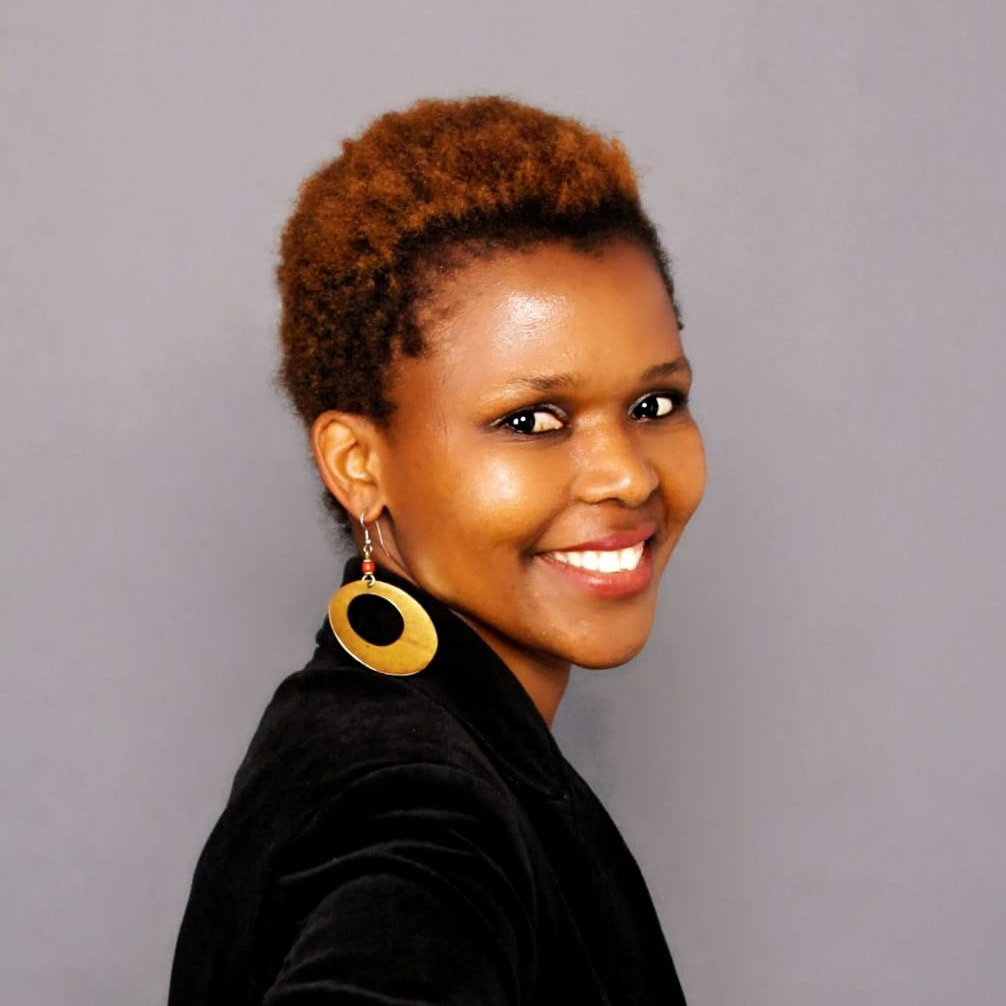
Ángela Ocampo is a sociologist by training and holds a master’s degree in social justice and peacebuilding. She is also an expert on gender issues and a researcher with experience in human rights. For more than twenty-five years she has worked in the field of activism for fundamental rights in Colombia, and her area of specialisation lies in the context of victims of state crimes. In fact, she is a co-founder of the National Movement of Victims of State Crimes (MOVICE). She has worked providing political support to male and female political prisoners in her country’s prisons and is one of the founders of the human rights organisation La Manada Feminista. In 2007 she survived an attempted enforced disappearance by state agents and since then she has lived under threat from various sectors because of her work protecting and supporting victims of gender-based violence committed by police forces.
nn
Human Rights Organisation La Manada Feminista
nLa Manada Feminista, as it is known, is an organisation that, since 2016, has been fighting for the human rights of feminised people, trans people and non-binary people. It was born in the city of Cali in response to the gender-based violence occurring in the mixed spaces of social movements. “We [referring to herself and the other founders] had been in mixed spaces in political and human rights organisations. There we experienced situations of sexual violence and political violence. That led us to leave those organisations. We decided to come together and work to have a safe space in which we could continue our activism,” explains Ángela Ocampo.
nThe organisation works along four lines or areas: training, protection, grassroots research and healing. In the area of training, La Manada Feminista runs the Juana Julia Guzmán Anti-Patriarchal Political School —in collaboration with the Danish Institute for Parties and Democracy (DIPD, a Danish body that funds cooperation projects in the fields of development and democracy)—; and the Nosotras Nos Cuidamos Feminist Human Rights School. The latter, in collaboration with the Fons Català de Cooperació al Desenvolupament, is aimed at women, the LGTBI community and activists involved in grassroots processes in the region. This school originated during the 2021 National Strike in Colombia and was created on the initiative of the people the organisation supported during the mobilisations. In the protection line, the organisation offers comprehensive feminist support to people who are at risk. “We do it taking into account a gender and race perspective, but in the exercise of social protest. In this line we support people both inside and outside the country. In fact, in Barcelona there are several compañeras who are part of this line and who are in exile. In this project we receive support above all from Amnesty International (AI), which also helps us in the research line,” explains Ocampo. It was with AI that La Manada Feminista carried out the study on sexual violence by the police during the National Strike. In the research line, the organisation also conducts gender audits of interested political parties.
nFinally, there is the healing line, which is very important in the organisation because it has its origins in the experiences of its founders. “We started this line because we are all survivors of sexual violence in childhood and throughout our lives. It is a very interesting line in which we work on both group and individual therapeutic support. We integrate a broad healing perspective that includes spiritual elements and practices of different kinds,” the activist emphasises. At present, this line of work has no funding and is carried out on a voluntary basis.
nColombia, a country in a process of rebuilding and healing
nThe arrival in power of Gustavo Petro (former mayor of Bogotá, former senator and former M-19 guerrilla) and Francia Márquez (Afro-descendant environmental activist) in June 2022 was a jolt not only for the country, but for the whole of Latin America. With the arrival of the left, a new opportunity opened up for human rights and reconciliation in Colombia, a country devastated by war and fear. The Colombian people’s weariness after years of policies against the most disadvantaged population became evident during the National Strikes of 2019 and 2021, under the presidency of Iván Duque. Systemic and structural poverty, the limited implementation of the Peace Agreements (signed in 2016), violence by the state security forces, the population gap (Colombia is one of the most unequal countries in the world) and the lack of opportunities were some of the reasons why the Colombian population took to the streets to protest. “The fact that the 2021 National Strike lasted two and a half months was unprecedented. Here, national strikes last a day or two. It had never happened before in Colombia’s political history. People were outraged because there was no life, or the life there was, was undignified,” explains Ángela Ocampo, who was heavily involved in those mobilisations.
nThe NGO Temblores, the Universidad de los Andes, Amnesty International and PAISS (Programa de Acción por la Igualdad y la Inclusión Social) wrote in a statement: “The repression with which the State has chosen to confront the demands of its citizens has left a lamentable toll of at least 4,687 victims of violence by members of the Public Force, broken down as follows: 1,617 victims of physical violence, 44 homicides allegedly committed by members of the Public Force, 2,005 arbitrary detentions of demonstrators, 784 violent interventions in peaceful protests, 82 victims of eye injuries, 228 cases of firearm shootings, 28 victims of sexual violence and 9 victims of gender-based violence”. After the strikes came Petro’s victory and, with him, new opportunities in a country where the prevalence of violence against women remains extremely high.
n
nViolence against women and feminised people in Colombia
According to available United Nations data, based on figures provided by the National Institute of Legal Medicine and Forensic Sciences, 27,594 cases of violence against girls and adolescent women were reported between 2015 and 2019. As for femicides, 978 women were murdered in 2021. “Four out of 10 murders of women are committed by a partner, ex-partner, relatives or acquaintances,” the report states.
nMore recent data, presented in the report on Gender-Based Violence (GBV) in Colombia, Vivir Sin Miedo, by the Fundación Paz & Reconciliación (Pares), state: “Between 1 January and 31 July 2023, more than one case of femicide a day occurred in Colombia. According to data from the Oral Adversarial Criminal System (SPOA) of the Office of the Attorney General, between 1 January and 31 July 2023 there were at least 301 femicides nationwide”. The same report highlights that during 2023 more than 203 cases of intra
nfamily violence against women were committed per day, and that between January and July of the same year 60,469 reports of domestic violence were filed nationwide. Although this represents a 26.2% reduction compared with the same period in 2022, it seems clear that there is still a great deal of work ahead on gender issues. As regards sexual offences, these fell considerably from 2022 to 2023, by 40.7%, the report stresses. Pares is optimistic about the data and the work of Petro’s Executive: “Although some of the campaign promises made on this issue have not been fulfilled, the country has a Government that understands very well the need to address GBV comprehensively and urgently”.
nGender-based violence is not the only scourge; inequality between men and women or feminised people is also an obstacle to social progress: employment, development and income opportunities remain lower for women, as do the percentages in terms of political participation. To this situation must be added the effects that the war has had over all these years. Official data indicate that: “More than 400,000 women have been victims of homicide in the context of the armed conflict, and there are more than 57,000 women victims of forced displacement”.
nWhy do you think this violence against women occurs even in the field of human rights protection? Isn’t it paradoxical, to say the least?
nIn 2020, during the pandemic, we carried out research on gender-based violence in mixed spaces. We worked with current and former activists from mixed spaces of the Colombian left. People from all social sectors and well-known organisations in Colombia took part, and in every case there had been serious situations of sexual, psychological, economic, political and symbolic violence. These cases show that it is a structural issue: the socio-political setting [of this violence] is quite revealing and complex. Based on this research we developed an Anti-Patriarchal Political School, aimed at left-wing activists, women and people from the LGTBQ+ population, with the goal of addressing and managing gender-based violence. It is not an institutional route, which is what we are used to. One of the characteristics of people on the left is that they do not report to the State because they don’t want to harm their organisation or because they come under pressure. We offer an alternative path.
nWhat does working in a non-mixed collective bring?
nIt is a collective that also includes marica people, non-binary people and trans people. We are not against mixed spaces. However, in non-mixed spaces people can talk about things that cannot be addressed elsewhere, especially in front of cisgender men. We have seen it for ourselves. The struggles and demands that have to do with what our bodies go through, with what we have lived, with our experience, with what we feel… They don’t end up at the bottom of the list, as does happen in other mixed spaces. In those spaces, issues of race and gender tend to be overlooked because they are not a priority. So the opportunity is lost to champion and to build from our own perspective on life, from our reality, from our bodies and from our existence. That is something very valuable and what sets La Manada Feminista apart from other human rights organisations in Colombia. It is an emancipatory feminist human rights organisation. It is an option for all those people who don’t feel comfortable in mixed spaces but are still interested in defending human rights.
n
nHow do people come to La Manada Feminista?
By word of mouth. We are a very well-known organisation in the region and in several parts of the country; we have even supported people abroad. We have a maxim: “the person who needs help is not the one I think needs help, but the one who is seeking it”. People come on their own and we support them, but we don’t go looking for people to support. Some of these people also come to us through friendly organisations. Right now we have a lot of demand in the protection and healing lines. All our lines of work are comprehensive and we offer an advisory space. All of this after listening to the person and after carrying out an analysis of both context and risk. Finally, recommendations are made, covering legal, criminal, social and political matters. Sometimes the aim is not to file a complaint with the prosecutor’s office, but to make a case visible. That is why we also carry out actions such as public shaming protests or other kinds of public interventions. Security is also very important to us. All our actions are framed within a feminist security perspective. On the basis of all this, a strategy for action is defined.
nWhat difficulties have you encountered over these eight years at La Manada?
nFirst of all, it is worth highlighting the political obstacles and the resistance to the existence of a feminist human rights organisation. At first we were not only unknown, but silenced, ignored. We had to learn to elbow our way through, inviting ourselves and building our own spaces. It has taken a great deal of effort to be taken into account. On the other hand, we have had to overcome the obstacle related to the war in Colombia, the general persecution of people who fight, which in our case got worse after the National Strike. We had to face many security problems; I myself was threatened, we were followed, etc. I had to relocate [change my place of residence]. These are structural issues that have to do with patriarchal violence.
Why are you being persecuted?
nWe have researched police violence and sexual violence by the police during the 2021 National Strike, and the violence that occurs in mixed organisations. We defend and support compañeras who have been raped by the police, but also by members of the guerrilla or even by human rights colleagues. That makes us unpopular and means we have to get around other barriers, such as funding, which remains the great challenge for our organisation. We are specialists with years of experience in social struggle, but our work becomes unsustainable if the right socio-economic conditions do not exist. For example, the healing line has been on hold for a year, with people on the waiting list.
nHow do you live with this very real fear, with these threats; and how do you approach life while being in the line of fire?
nUnfortunately, this is not the first time it has happened to me. I was a victim of the armed conflict in 2007: I survived an attempted enforced disappearance by the DAS, which is the president’s police. At that time I was displaced, living somewhere else. I didn’t want to leave the country then and I haven’t wanted to leave now either. As a result of that very serious situation, I became an expert in security; that’s why I am in charge of La Manada‘s protection line. I learned to find my way around in that environment, because I was always clear that I wasn’t going to give up the struggle. Now the persecution has returned and has been escalating: the surveillance has increased, they have been stealing my rubbish, I have seen people spying on me from the top of a pole in the early hours of the morning, and so on. I have photos of everything, because I’m a bit reckless and I have even confronted them. La Manada has followed my whole process very closely. When the persecution became completely obvious, I relocated and we carried out a security assessment. Not only for my sake, but because we legally represent several victims of the police in connection with the National Strike, so we improved our whole document management system and now we have very solid IT security and a security protocol based on a feminist self-protection perspective. I accepted the relocation, but I am clear: I will not leave the country, nor will we lower our profile [at La Manada]. In fact, we did exactly the opposite: raise our profile, gain more visibility and exert more pressure to consolidate a network that is becoming increasingly solid. We have friends and institutions that know us in Europe and here. We take shelter in the network.
nIt sounds like a very complex situation.
nI have even had drones at my window. Now I live in a residential complex with a concierge, on a high floor. And even so. I have learned to live with it. The problem is that all this security involves a series of financial efforts. It suits the State very well for us to leave the country, but for us that is not an option; at least for now.
nIn June 2022 the leftist Gustavo Petro took office as President of Colombia. Although change is difficult and complex, given the country’s past, have there been noticeable improvements on gender issues?
nI think that the very fact of having reached the presidency is a very important change in itself. It has come after two hundred years of struggle, which makes it significant. It is also very important that the vice-president, Francia Márquez, is a Black woman who got there by leading the struggle for the land and against mining and transnational corporations. They have pushed through interesting proposals and significant contributions have been made to the power structure in Colombia. The priorities of the State are being changed. Colombia is a country with a very large Black and Indigenous population and a hugely diverse population, but this is not recognised by the institutions, even though it is part of the country’s national identity. At the moment we are gaining rights and conquering more spaces, if you take the historical perspective into account. Progress has been made, but patriarchy and the patriarchal pact are something structural: there are men in the Government who have been reported for sexual violence and the presidency has not taken these complaints into account. In the vast majority of cases, priority is given to the fact that he is a “compañero”, a leading figure. Other scandals are also known; for example, in the Congress of the Republic there is a whole dynamic of sexual exploitation of female civil servants, and that has also been forgotten. These are unresolved issues that hold back progress. Some issues are sacrificed for the sake of others that are considered more important, more urgent or more strategic. One of the conclusions of the study we carried out in 2020 is that all this [ignoring gender-based violence in left-wing spaces] happens during the period of democratic opening in Colombia, which began in 1991. Social movements have made significant progress in the fight against capitalism, but not in the fight against patriarchy and racism; so we continue to reproduce this violence within our own processes, because priority is given solely to the class struggle.
nSome young people are becoming very conservative and are reproducing this gender-based violence. Does that worry you?
nIt seems the world is veering towards the far right. We are also affected by this fascist wave that is gaining strength around the world, but in the case of Colombia we need to look at the democratic security policy deployed during the first decade of the 2000s, which is linked to United States foreign policy and to political genocides. In the 1980s, a political genocide was carried out in Colombia that left thousands of people murdered or disappeared. Then came a war that caused the displacement of more than eight million people and the disappearance of almost 100,000 people. These are terrifying figures, and they have a direct effect on how today’s youth has been shaped: these young people have learned the hard way that if they get involved in social struggle, they can be killed. This produces young people who are indifferent, apathetic and somewhat cynical about the struggle. In this context, class also plays an important role: it is middle-class young people who adopt this stance. Young people from working-class sectors keep fighting because, in the end, they are the ones most affected by the war. It is these young people who are most vulnerable to forced recruitment, whether by the guerrillas, the paramilitaries, drug trafficking or hired killers.
n